Emergencies
No hot water — what to check and who to call
No hot water is stressful, but many cases are not dangerous. First check for safety, then try a few simple checks, and if you need help, MainLine Match can connect you for free with a licensed, insured 24/7 plumber near you.
First 5 minutes — shut off your water
If water is flooding, stopping it comes first. Here's the fastest safe order.
- 1 Shut off the water main. Find your main shut-off valve — usually where the water line enters, near the street, the basement, or the meter — and turn it fully clockwise to stop the flow.
- 2 Stay safe. Keep clear of standing water near outlets or appliances. If you smell gas or see water near electrical panels, leave and call emergency services first.
- 3 Limit the damage. Open a low faucet to drain the lines, move valuables, and soak up water you can reach safely. Take a few photos for your records.
- 4 Get a licensed plumber. Get matched, free, with a licensed 24/7 plumber near you. Ask for the price in writing before work starts — you compare and choose who to hire.
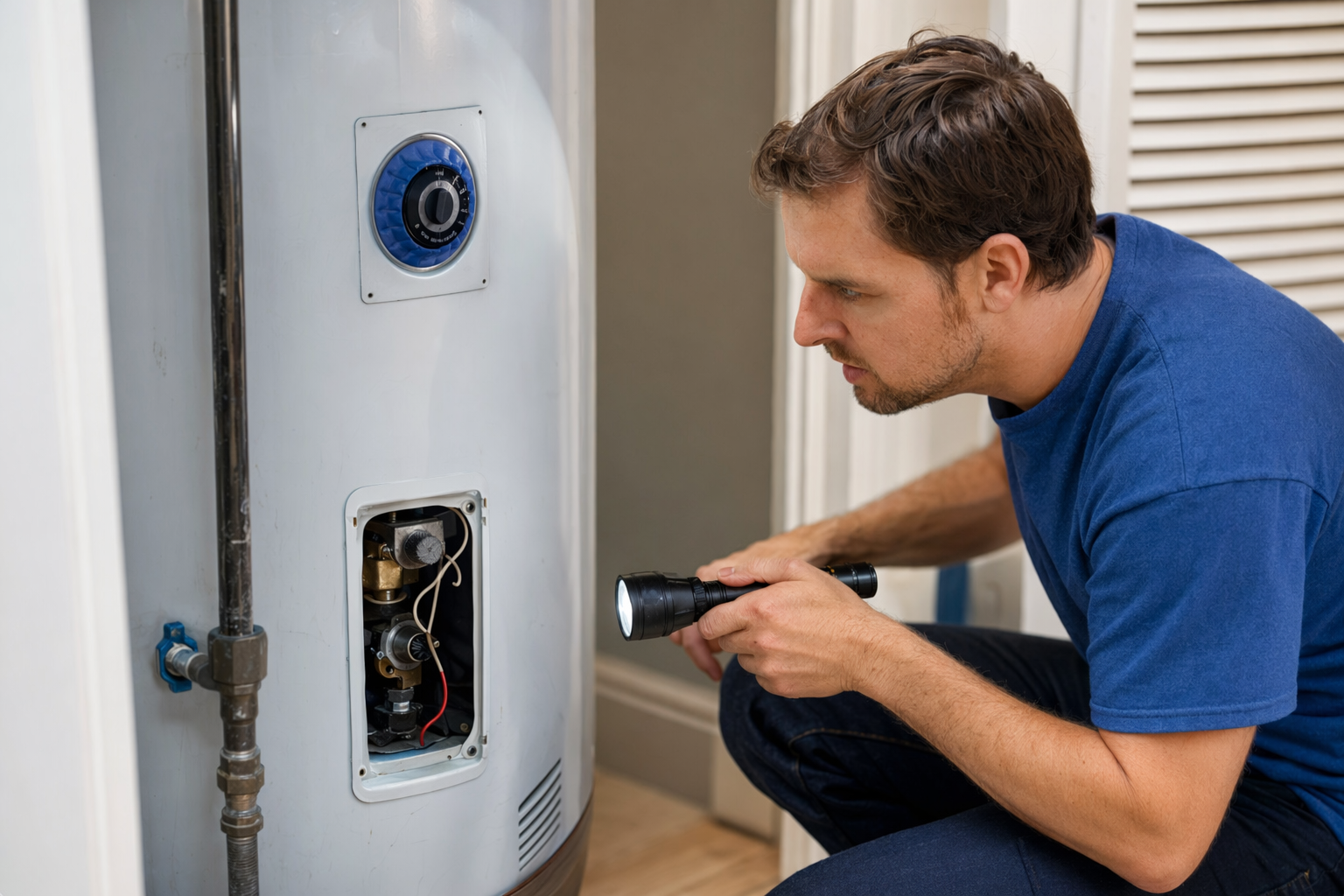
What to do right now
- If you smell gas, or you see water near live electrical parts, leave the area and call your local emergency number first.
- If the water heater is leaking, shut off the water supply to the heater or the home's main water shutoff if needed. If you need help finding it, see how to shut off your water.
- Turn off power to an electric water heater at the breaker only if you can do it safely and without standing near water. For a gas unit, do not force anything if you smell gas.
- Put towels or a bucket down if there is a small leak, and move boxes or valuables away from the area.
- Check a few basics: is the hot water out at every sink and shower, or just one? Did the breaker trip? Is there a simple reset button on the unit? If you rent, tell your landlord or property manager.
- If you have no hot water everywhere, a leak, odd noises, rusty water, or a unit that will not restart, get help fast through MainLine Match.
- Safety first if gas or electricity may be involved
- A leaking water heater can become a bigger problem quickly
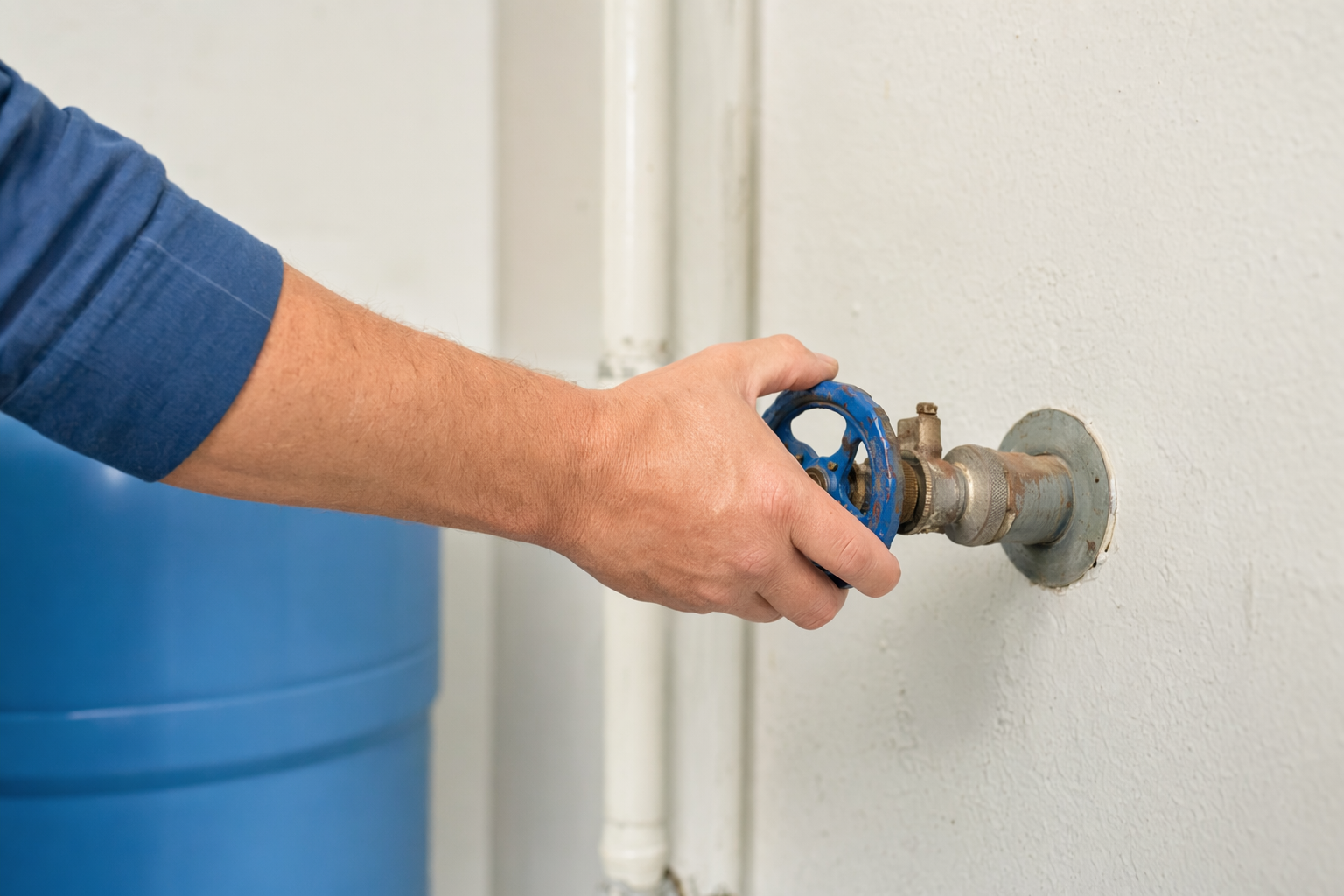
When no hot water is a true emergency
No hot water is sometimes urgent, but not always a full emergency. If the heater simply stopped making hot water and there is no leak, no burning smell, no gas smell, and no electrical hazard, it may be able to wait a short time for a licensed plumber.
It is more urgent if the water heater is leaking, making loud popping or banging sounds, showing signs of corrosion, sending out rusty or discolored hot water, tripping the breaker, or if you smell gas near a gas unit. Water heater leaks can damage floors and walls. A failed heater can also leave a family without hot water for bathing, cooking, cleaning, or heat in some homes.
Call for help right away if:
- The tank is leaking or dripping heavily
- You smell gas
- Water is near wiring, outlets, or the breaker panel
- The unit is making unusual loud noises
- There is no hot water anywhere in the home and you suspect the heater has failed
- You see water stains, pooling, or damage around the heater
Quick things that may explain it
A few simple issues can cause no hot water. Sometimes the problem is only at one faucet or one shower. In that case, the issue may be local to that fixture and not the water heater itself.
Across the whole home, common causes include a tripped breaker on an electric heater, a failed heating element, a thermostat problem, a pilot or ignition issue on a gas heater, sediment buildup in the tank, an old failing unit, or a leak. Tankless systems may also stop heating because of scale buildup, venting issues, error codes, or flow-related problems.
General checks people often make:
- See whether cold water is still working normally
- Test hot water at more than one fixture
- Check for visible leaks around the heater
- For electric units, see if the breaker has tripped
- For tankless units, look for an error display
- Think about the age of the heater; older units fail more often
If anything seems unsafe, stop there and wait for a licensed plumber. This page gives general information only, not repair or safety advice.
What a water-heater repair or replacement may cost
Costs vary a lot by the real problem, the type of heater, the parts needed, your area, and whether you need after-hours service. These ranges are general information only, not quotes.
A service call or diagnostic visit may run about $80 to $250 in many areas. A smaller repair, such as a thermostat, heating element, igniter, or relief valve issue, may be roughly $150 to $600. More involved repairs can run higher, especially on tankless systems or if special parts are needed.
If the tank itself is leaking, replacement is often more realistic than repair. A basic tank water heater replacement may be around $1,000 to $3,000 or more installed in many US areas. Tankless replacement can be higher, often about $2,000 to $5,000+, depending on size, venting, gas or electrical needs, and code requirements. After-hours, weekends, and emergency calls usually cost more. You can learn more on our costs guide.
Before work starts, ask for:
- The total price in writing
- What parts and labor are included
- Whether the price is for repair or full replacement
- Whether permit or disposal costs are extra in your area
- Whether there are added after-hours charges
How to avoid overpaying in a stressful moment
When there is no hot water, it is easy to feel rushed. A good plumber should explain the likely problem in plain language, tell you what they found, and give you a written price before work starts. You stay in control: you choose who to hire, confirm the price, and confirm the work is done before paying the final amount.
Be careful with red flags like vague pricing, scare tactics, pressure to approve a huge replacement immediately, cash-only demands, or someone who will not confirm they are licensed and insured if your state or locality requires it. Costs, rules, and who is responsible for certain plumbing issues can vary by area, so local verification matters.
Ask simple questions:
- Are you licensed and insured for this work?
- Is this a repair or do you recommend replacement, and why?
- What is the full written price before work starts?
- What happens if the problem turns out to be different?
- Is this an emergency rate because of the time of day?
How MainLine Match helps you get a plumber fast
MainLine Match is a free matching service for households. We are not a plumbing company, not a licensed plumber, and we do not perform plumbing work. We help connect people across the United States, including new immigrants and non-native English speakers, with licensed, insured 24/7 emergency plumbers near them.
To get matched, we only collect basic contact and problem details: your name, phone number, optional email, problem type, ZIP code, and preferred language. We do not ask for financial account numbers, Social Security numbers, income details, or sensitive records.
If you need help now, start at get matched or visit emergency plumbing help. Tell the plumber exactly what you see: no hot water anywhere, leak or no leak, tank or tankless, gas smell or no gas smell, and whether the problem started suddenly. That helps them prepare, but no service, price, or arrival time can be guaranteed.
If you lost hot water, check for gas, leaks, or electrical danger first, then get a written price from a licensed plumber if the heater needs repair or replacement.
Common questions
I have no hot water, but no leak. Is that still an emergency?
Sometimes yes, sometimes no. If there is no leak, no gas smell, and no electrical hazard, it may be urgent but not a full emergency; if the unit will not restart or the whole home has no hot water, call a licensed plumber soon.
Should I shut off my main water if I only have no hot water?
Not usually. Shut off water if the heater or nearby plumbing is leaking; if there is no leak, a full main shutoff may not be needed.
Why do I have hot water in one sink but not the shower?
That can point to a fixture-specific problem instead of the water heater itself. A licensed plumber can check the shower valve or other local parts.
How much does an emergency water-heater repair cost?
A diagnostic visit may be around $80 to $250, and many repairs fall roughly in the $150 to $600 range, but some are higher. The real price depends on the issue, parts, heater type, time of day, and your area.
Can MainLine Match send a plumber right now?
We can help connect you with licensed, insured 24/7 plumbers near you, but we do not perform plumbing work ourselves and cannot guarantee arrival times, pricing, or outcomes.
What information do I need to give to get matched?
Just basic contact and problem details: name, phone, optional email, problem type, ZIP code, and preferred language. The service is free for the household.