Guides
How to vet a plumber before you say yes
You can check a plumber quickly—even during an emergency—so you avoid scams and unexpected costs. Start with safety and the water shut-off if needed, then verify license, insurance, and clear written pricing before you say yes.
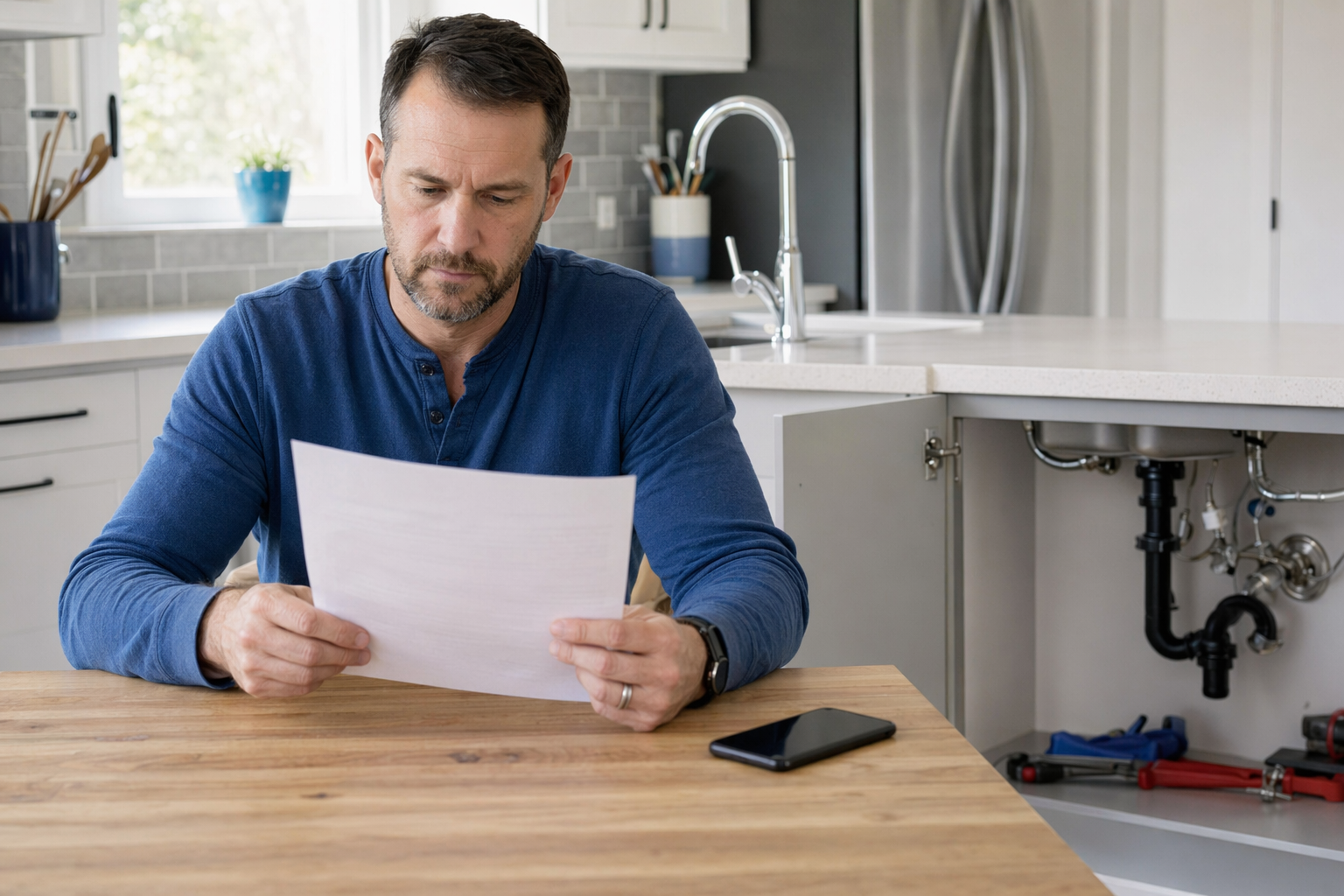
What to do right now (quick safety + damage control)
1. If water is flooding or you have a major leak, shut off your main water valve if you can do it safely.
2. If you have sewage backing up, keep people and pets away from the area and avoid contact with the water.
3. If you smell gas, see sparks, or water is near live electricity, leave the area and call your local emergency number first.
4. Once immediate danger is handled, ask the plumber to show identification, and get the price (and what’s included) in writing before work starts.
- MainLine Match is a FREE matching service. We connect you with licensed, insured 24/7 emergency plumbers, but we don’t do the plumbing work.
The 5 checks that matter most before you agree to a repair
When you’re stressed, it’s easy to accept the first answer you hear. These checks are simple and help you spot overcharging or unlicensed work.
- License check: Ask for the plumber’s license number and the state/city it’s issued in, then verify it with the licensing board in your area.
- Insurance check: Ask whether they carry general liability and workers’ compensation (if applicable in your area). If they can’t explain coverage, that’s a red flag.
- Written scope of work: Before they start, ask exactly what they will do (for example: clear a clog vs. replace a section) and what tools/parts are included.
- Written price before authorization: Get a written estimate or itemized quote. “Final price will depend” can be okay for some unknowns, but you should still get the plan and any “not-to-exceed” guidance if possible.
- Confirm they’re actually the person who will do the work: If someone else will arrive, ask for names and contact info. Avoid “we’ll send whoever” if you can.
- If you can’t verify any of the above quickly, pause and ask follow-up questions—politely. You’re allowed to take a moment.
Red flags that often mean scams or sloppy work
These signs don’t always mean a plumber is bad—but they are strong reasons to slow down and ask for more proof.
- Vague pricing: “It’ll be a lot,” “You need it all replaced,” or no clear breakdown.
- Pressure tactics: They push you to say yes immediately, to authorize a huge repair on the spot, or to pay in cash only.
- No license or no insurance: They refuse to provide license details or proof of insurance.
- “Scare tactics”: Claims like “your whole system will fail” without explaining what they found and showing evidence.
- Changed story mid-job: They give one plan at the start, then dramatically expand the scope without your approval.
- Work without clear documentation: No invoice, no explanation of parts used, and no record of what was repaired.
- If anything feels off, you can ask for a second opinion when it’s safe to do so—even briefly.
How emergency pricing usually works (so you don’t get surprised)
Emergency calls often cost more than regular hours because plumbers are on standby and may need to travel quickly. Exact costs depend on your area, the severity, what’s broken, parts availability, and whether specialized equipment is needed.
Here are honest, general ranges (not quotes):
- Initial service call / diagnosis: Often falls somewhere around $100–$300 for many areas, sometimes more after-hours.
- Unclogging/clearing a drain: Many jobs land in the $150–$600 range, but tough blockages can be higher.
- Repairing a leak (varies a lot): Commonly in the $300–$1,500 range, depending on access and whether parts replacement is needed.
- Major leak, pipe replacement, or sewer-related issues: Can be $1,500–$5,000+ (or more), especially if walls/ceilings must be opened, there’s extensive excavation, or additional line work is needed.
After-hours (nights, weekends, holidays) and travel distance can push costs higher. Also, “find and fix” jobs may cost more once the real problem is confirmed—so get the most specific written scope you can before they begin.
- Price ranges are not guarantees. Ask for the plan, the expected parts, and what could change the price.
Questions to ask before you say “yes” (fast script you can copy)
You don’t need to negotiate—just get clear information. Here are practical questions that usually settle cost and scope quickly.
1. “Are you licensed and insured in my area? What’s your license number, and can you show proof of insurance?”
2. “What is the problem you found, and what evidence supports that?”
3. “What exactly will you do first? If you discover something else, what’s the next step?”
4. “What’s the total price for the first visit or first step, including labor and any standard parts? Can you put it in writing?”
5. “What parts or additional work might change the price? What would you do only after you get my approval?”
6. “When will payment be due, and what forms of payment do you accept?”
7. “Can you confirm the work is complete and safe before you wrap up?”
- If the plumber won’t write down the scope and price before work starts, consider that a serious warning sign.
How MainLine Match helps (and what we do and don’t do)
MainLine Match is a FREE multilingual service that helps households across the United States get connected with licensed, insured emergency plumbers near them.
When you request help, we collect contact information and your problem type and ZIP code, plus your preferred language. We do not perform plumbing work, and we do not manage the plumbing job itself.
If you need a plumber right now, you can start here: Get matched with an emergency plumber. If you’re trying to decide what’s happening, you can also browse our general guidance in Emergency plumbing help and cost information in Emergency plumbing costs.
- Households stay in control: you confirm the price before work starts and confirm the work is done before paying the final amount.
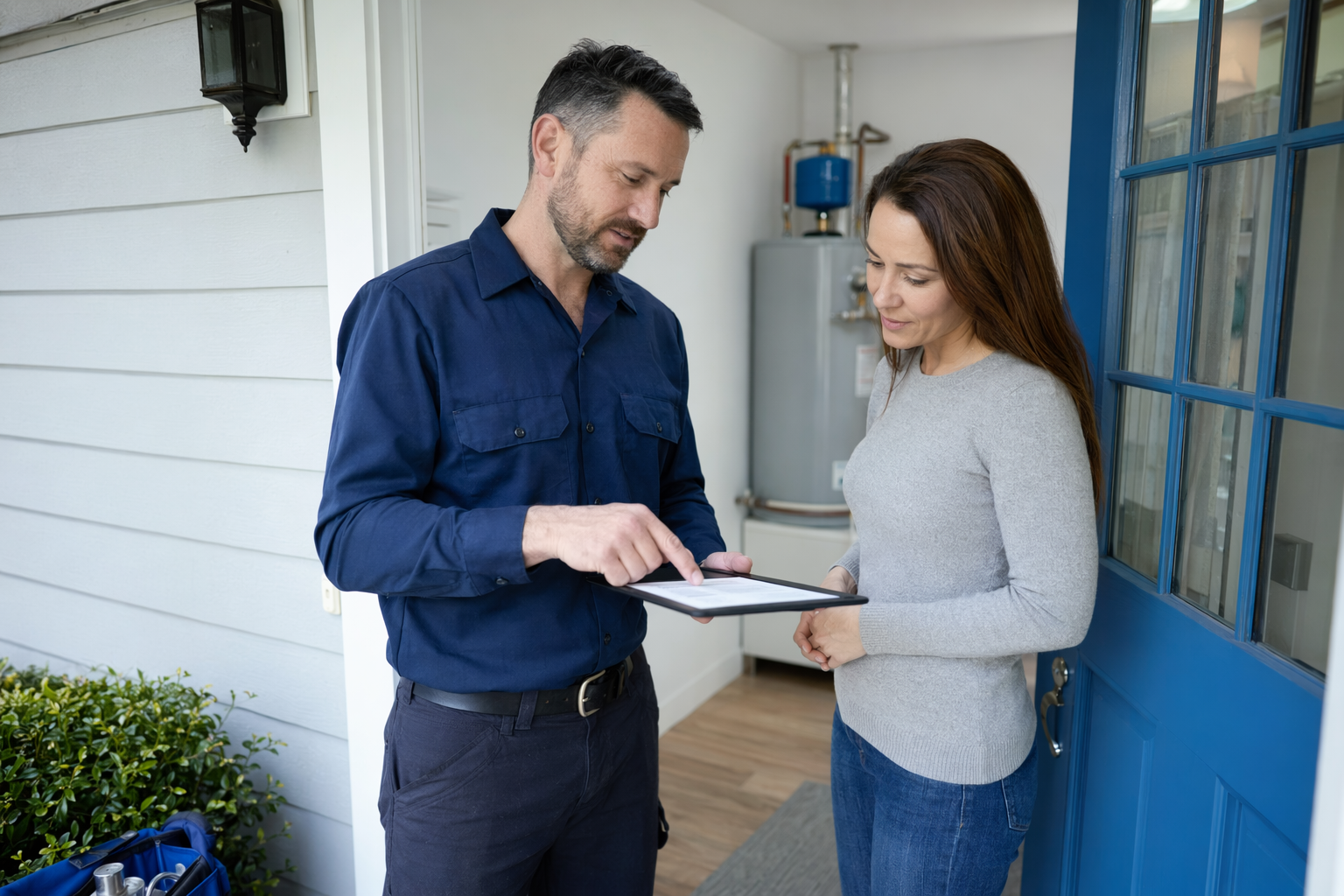
Shut off water if you can, then before you say yes check license/insurance, require written scope and price, and watch for pressure, vague costs, or scare tactics.
Common questions
A plumber is here right now and says I need an expensive repair immediately. What should I do?
Ask for the license/insurance info and get the scope and price in writing before you authorize anything. If the situation is dangerous (like active flooding or sewage), focus on shutting off water and containing damage first, then decide on repairs once the plan and costs are clear.
How can I verify a plumber’s license quickly?
Ask for the license number and the state/city it’s issued in, then check it with your local licensing board website. If they can’t provide details or verification, treat that as a red flag.
Can a plumber charge more than the estimate after they start?
It can happen when the real cause is uncovered, but you should expect clear written terms about what changes the price. Ask what could change, get that explained upfront, and authorize extra work only after you confirm the updated cost.
Is MainLine Match a plumbing company?
No. MainLine Match is a FREE matching service that connects you with licensed, insured emergency plumbers. We don’t do plumbing repairs or control the job.
What are common red flags with emergency plumbing services?
Common red flags include vague pricing, pressure to approve a big repair immediately, refusal to provide a license/insurance proof, cash-only demands, and no written invoice or clear explanation of what was done.