Guides
How to shut off your water in an emergency
If water is flooding, shut off the nearest valve or the main water valve now. If you cannot find it fast, get to a plumber through [emergency help](/emergencies/) while you keep the area as safe and dry as you can.
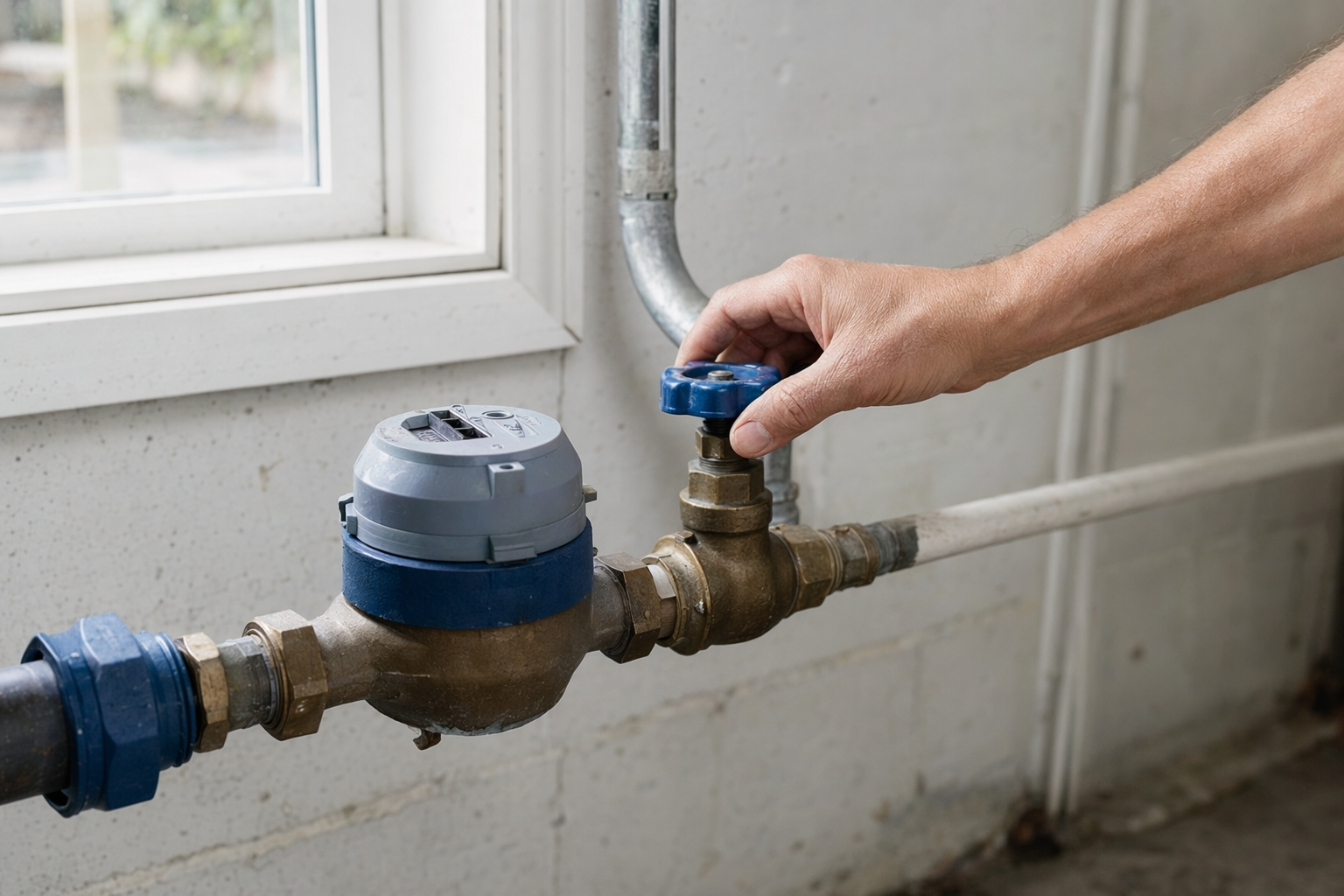
What to do right now
- Turn off the nearest water shutoff you can reach. If a toilet, sink, washer, or appliance is leaking, use that small valve first.
- If the leak is bigger, find and turn off the main water valve for the whole home.
- If water is near outlets, cords, appliances, or the electrical panel, stay away from that area.
- If you smell gas, leave the home and call your local emergency number first.
- After the water is off, call a licensed, insured emergency plumber or use Get matched for help finding one.
- Do not wait to “see if it stops.”
- If you cannot reach a valve safely, leave it and get help.
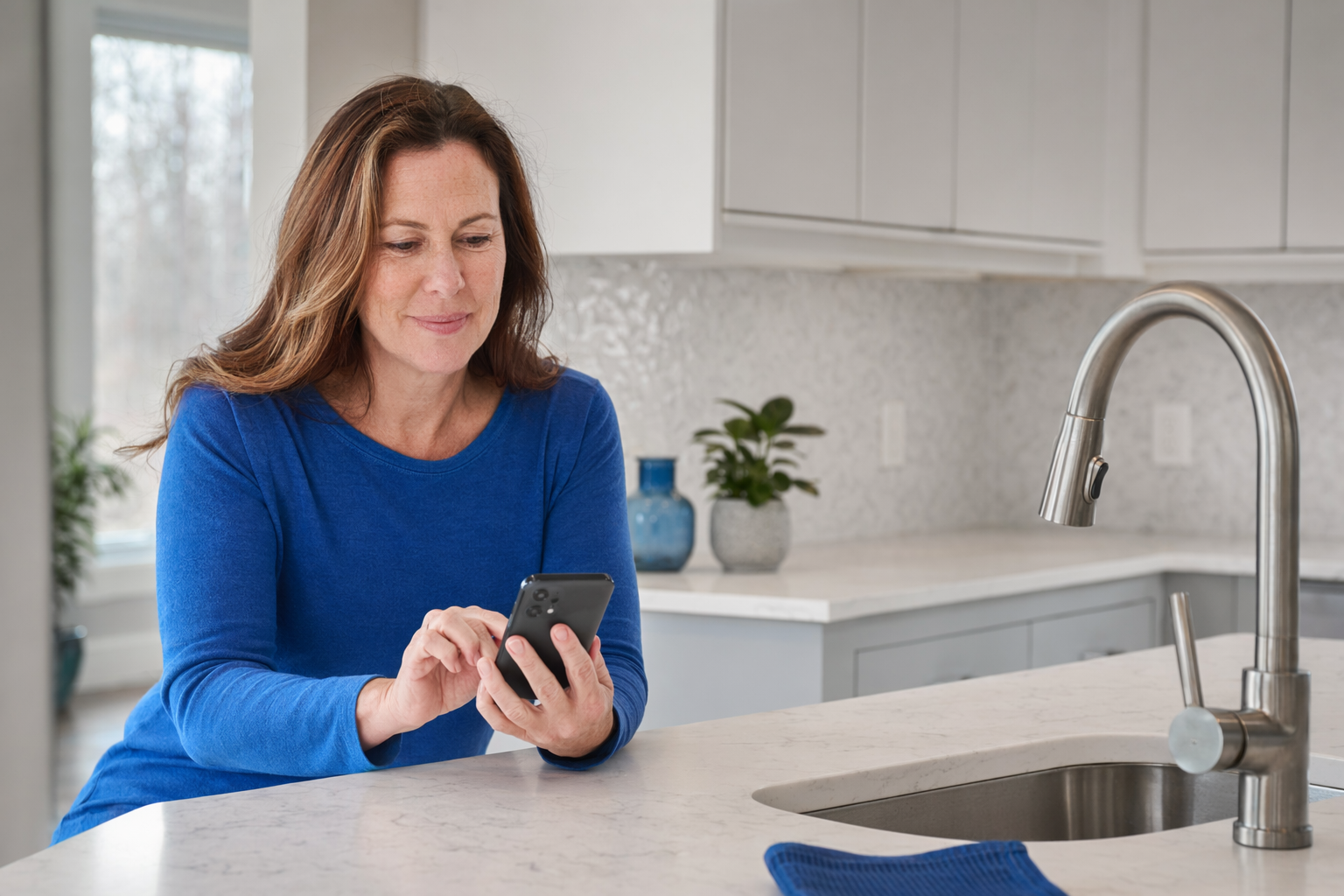
How to find the main water shutoff
The main shutoff is usually where water enters the house. Common places are near the front wall, basement, crawl space, garage, utility room, or outside by the meter.
Look for a round wheel handle or a lever-style valve on the main pipe. If it is a lever, turning it a quarter turn usually closes it. If it is a wheel, turn it clockwise until it stops.
In apartments or condos, the shutoff may be in a utility closet, under a sink, in the hallway, or handled by building staff. If you are not sure, call property management or building maintenance right away.
- Main valve: stops water to the whole home.
- Small shutoff: stops one fixture or appliance.
How to shut off different kinds of water
For a sink or toilet, look under the fixture for a small valve on the pipe. Turn the handle until it stops. For a toilet, the valve is usually behind or below the tank.
For a washing machine, dishwasher, or water heater, look for shutoff valves on the supply lines or nearby pipes. If you cannot clearly identify the right valve, do not force anything.
If you need to protect a water heater or appliance after the water is off, a licensed plumber should inspect it before you turn things back on. MainLine Match is a free matching service — we do not do plumbing work ourselves.
- When in doubt, use the main shutoff instead of guessing.
- Do not force a stuck valve; that can make the problem worse.
Red flags: when to leave and call for help
Leave the area first if you see water near live electricity, sparking, burning smells, or a flooded electrical panel. Call your local emergency number if there is immediate danger.
If you smell gas, do not use switches or appliances. Get out and call emergency services or the gas company from outside.
If the water is rising fast, you cannot reach the valve safely, or the leak is tied to a broken pipe, sewage backup, or major damage, treat it as urgent and get a licensed plumber as soon as possible.
- Water + electricity = do not stay in the wet area.
- Gas smell = leave first, then call.
After the water is off
Once the flow stops, open only the safe, dry areas you need to check. Move valuables away from standing water and take photos for your own records if it is safe to do so.
Then contact a licensed, insured plumber. A good pro should be willing to explain the problem, give a price in writing before work starts, and answer basic questions about licensing and insurance. You should stay in control: confirm the price first, choose who to hire, and confirm the work is done before paying the final amount.
Watch for red flags like vague pricing, pressure to approve a huge repair right away, cash-only demands, or “we can fix it now” without a clear explanation. If you want help finding someone, use Get matched.
Costs and what affects them
Shutoff help itself is usually not a separate charge if it is part of an emergency service call, but the real cost depends on the problem, the time of day, the parts needed, and your area. After-hours visits usually cost more.
For an emergency plumbing visit, a common range can be a basic service call plus repair costs, but that is only a range, not a quote. A simple valve replacement may cost much less than a burst pipe, hidden leak, or water heater problem. Sewer or main-line issues can cost more, and who is responsible can vary by area.
MainLine Match is free for the household. We collect only contact details and problem details so we can help connect you with licensed, insured plumbers. We do not collect financial account numbers or other sensitive records.
- Ask for the full price in writing before work starts.
- Ranges are not quotes and do not guarantee final cost.
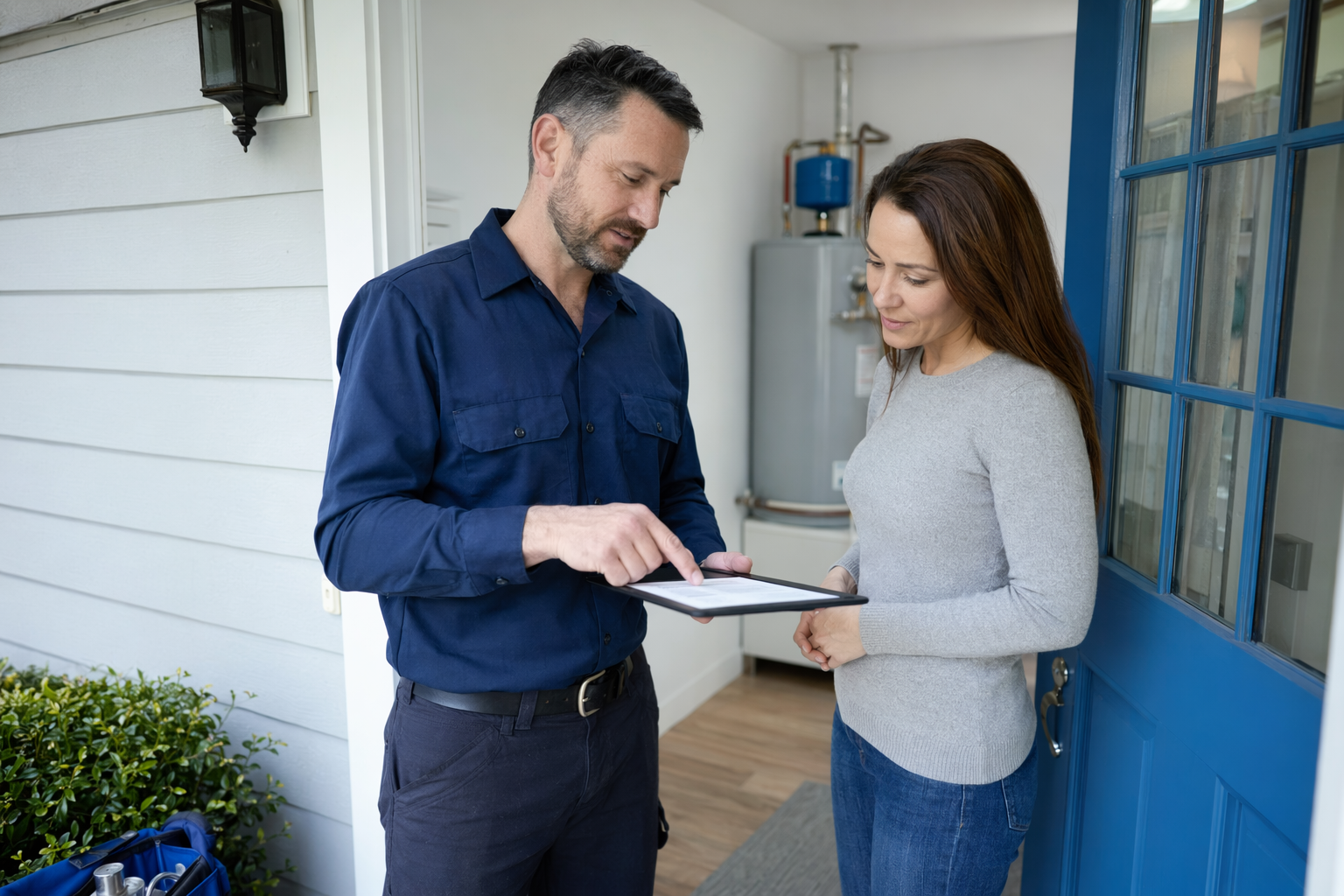
In a water emergency, shut off the nearest valve or the main water valve first, stay away from electricity and gas risks, and then get a licensed plumber with a price in writing before work starts.
Common questions
Which valve should I turn off first in a water emergency?
Turn off the nearest shutoff for the leaking fixture if you can find it quickly. If that is not clear or the leak is bigger, use the main water shutoff for the whole home.
What if I cannot find the main water valve?
Do not waste too much time searching in a flood. If it is safe, look near where water enters the home, then call a licensed plumber or use [Get matched](/get-matched/) for help right away.
Can I turn the water back on myself after a leak?
You can turn it back on only after the problem is clearly resolved and the area is safe. If a pipe burst, a valve failed, or you are not sure what happened, have a licensed plumber check it first.
Is MainLine Match a plumbing company?
No. MainLine Match is a free matching service that helps households connect with licensed, insured emergency plumbers. We do not perform plumbing work.