Guides
Repairing vs replacing a water heater
A water heater problem can feel urgent, but “repair” vs “replace” usually depends on age, damage, and the specific failure. Here’s a calm, plain comparison to help you decide—then you can get matched free with a licensed 24/7 plumber.
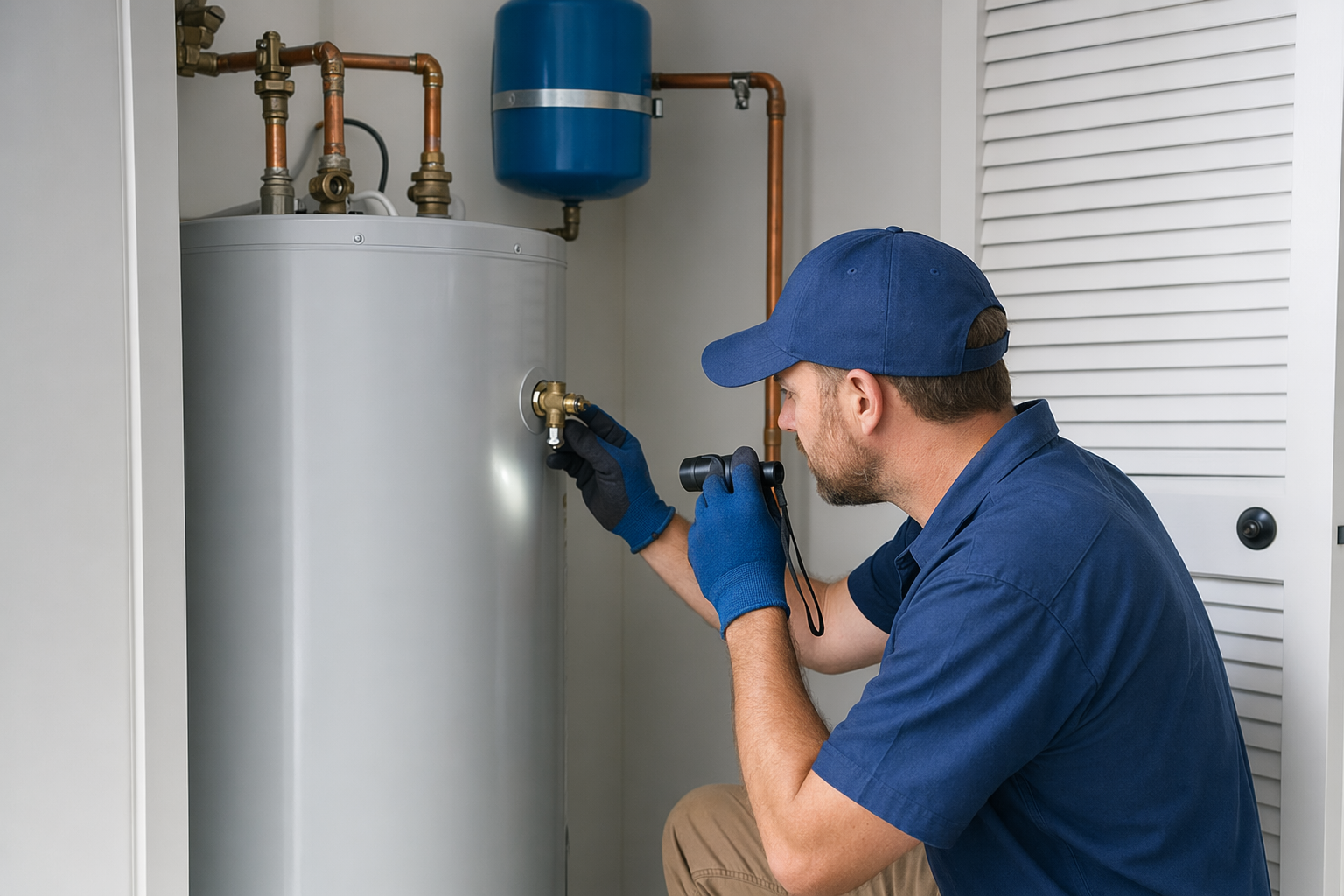
What to do right now (safety + limit damage)
1. If you smell gas (or suspect a gas issue), leave the area and call your local emergency number first.
2. If there’s active flooding or leaking, turn off the water supply to the heater if you can do so safely.
3. If you can safely do it, shut off power or the heater’s control switch (especially if water is near electrical parts). If you’re not sure, skip this and wait for the plumber.
4. Don’t keep using hot water if the heater is leaking, rumbling loudly, or producing strange smells—stop and get help.
5. Take a quick photo of the heater and any leaks (if safe). It helps the plumber diagnose faster.
If this is a full plumbing emergency (burst pipe, sewage backup, no water), start with emergency help or get matched.
Option A: Repairing a water heater (when it often makes sense)
Repair is usually considered when the heater is relatively newer, the problem seems limited, and the unit’s main parts are likely still in good shape. A licensed, insured plumber will typically inspect the heater, review error codes (if any), and check for leaks or failing components.
Common repair situations can include replacing a failed thermostat, heating element (for electric), gas control parts (for gas), thermocouple, pressure-relief valve, or fixing a specific leak location. If the tank itself looks sound and the issue is a single component, repairing can be the faster, lower-cost path.
Repair can also make sense if you need short-term hot water and the cost to replace is harder to manage right now—just be sure you understand what exactly will be fixed and what symptoms might return.
Important: repairs still have limits. If the tank is corroded, the burner area is heavily damaged, or there are repeated failures, repair may only be a temporary solution.
- Often best for: newer units, single-component failures, or a small, clearly fixable leak
- Pros: usually less upfront cost and can be quicker than replacement
Option B: Replacing a water heater (when replacement is often the better long-term move)
Replacement is commonly recommended when the heater is older, the tank is leaking or heavily corroded, or the failure suggests multiple underlying problems. Tanks that are nearing the end of their useful life may continue to break down even after small fixes.
Replacement is also considered when safety risks are involved, such as major leaks, serious burner/venting issues (for gas heaters), or repeated malfunctioning. Your plumber may also recommend replacement if repairs would cost close to replacement—especially if you’re paying labor and parts again later.
Another reason to replace is performance. Some homes need a better fit for current household hot-water demand, and efficiency changes can matter over time. Depending on your home and local rules, a plumber may suggest an updated model that meets modern efficiency standards.
Because requirements vary by location and heater type, the “right” choice depends on what your plumber finds during inspection.
- Often best for: old units, tank leaks, heavy corrosion, repeated failures, or repair costs near replacement
- Pros: more predictable long-term performance (no guarantee, but fewer recurring problems)
How plumbers decide: key factors that change the answer
There’s no universal winner. Most decisions come down to a few practical factors:
- Age and condition: Older heaters are more likely to have multiple worn parts.
- What’s actually broken: If it’s a single part, repair may be reasonable. If the tank is failing, replacement is more likely.
- Evidence of tank corrosion or active leaks: Even a “small leak” can signal a larger tank problem.
- Repair estimate vs replacement estimate: If repair is close to the cost of a new unit, replacement may reduce future repeat visits.
- Heater type and setup: Gas vs electric, venting needs, and space constraints affect options and complexity.
- Local code and permit rules: Replacement may trigger inspections, venting changes, or other required updates.
If you want a clear comparison, ask the plumber to explain (1) what’s failing, (2) whether it’s likely to be a one-time fix, and (3) what alternatives cost and what each option changes for your timeline.
Cost ranges: what to expect (and what makes prices swing)
Costs vary a lot by area, heater type, and the exact problem. Also, after-hours emergency work usually costs more than same-day daytime service.
General ranges people often see (not quotes) include:
- Repair (typical component fix): often in the low hundreds to a few hundred dollars, depending on parts and labor.
- Repair (more involved or multiple components): can go higher, especially if diagnosis takes time or parts are expensive.
- Replacement: commonly several hundred to a few thousand dollars total, depending on the new unit’s type/size, any required upgrades, and labor. Additional costs can apply for venting, piping changes, permits, and disposal.
What drives costs up:
- Emergency timing (nights, weekends, holidays)
- Difficult access (tight spaces, old piping, corroded connections)
- Parts availability and unit type
- Any required code upgrades for replacement
What can lower costs:
- Non-emergency scheduling
- A straightforward diagnosis with a single failing part
- Clear, accessible installation conditions
Because ranges are not guarantees, your final price should depend on what a licensed plumber finds. For your protection, ask for the cost in writing before work starts and confirm you approve the amount before paying.
How to get a licensed 24/7 plumber (free match) + how to avoid overpaying
MainLine Match is a FREE matching service. We don’t do plumbing work, and we aren’t a licensed plumbing company. We help connect you with licensed, insured 24/7 emergency plumbers near you based on your ZIP and the problem.
To get matched, use get matched and share:
- Your ZIP code
- Your preferred language
- What’s happening (no hot water, leak, odd noises, error code, etc.)
- Whether you need help now
After a plumber arrives, keep control of the decision. Ask for a clear explanation of the problem and what each option (repair vs replace) would involve. If a company tries to rush you into a big, unclear repair, asks for cash-only, or gives vague pricing with scare tactics, be cautious. Get the price in writing first.
Helpful questions to ask (plain and direct):
- “What exact part or failure is causing this?”
- “Is the tank likely failing or just a component?”
- “What would repair cost now, and what’s the chance it comes back?”
- “What would replacement cost, and would any upgrades be required by code?”
- “Can you show the itemized estimate before starting?”
Repair or replace depends on what’s broken, whether the tank is failing, your heater’s age, and the real cost comparison—get a free match to a licensed 24/7 plumber to inspect and estimate your options.
Common questions
My water heater is leaking a little—should I repair it or replace it?
A small leak can sometimes be a single valve or connection, but it can also mean tank corrosion. A licensed, insured plumber should inspect the leak location and the tank condition, then compare the repair estimate to replacement—especially if the tank is involved.
Is it ever cheaper to repair a water heater than replace it?
Often, yes—when the unit is relatively newer and the issue is limited to a component. But if repairs are expensive or the tank is failing, replacing may cost less over time. Ask for written itemized estimates for repair and replacement.
How do I know if my water heater is “too old” to repair?
Age alone isn’t the only factor; condition and what’s failing matter most. If the heater is old and the tank shows corrosion or repeated failures happen, replacement is usually the more reliable option.
What should I ask a plumber to compare repair vs replacement?
Ask what exact failure is causing the problem, whether the tank looks healthy, and what each option would cost in writing. Also ask what upgrades (if any) might be required by local code if you replace.
Can a plumber give me an exact price over the phone?
Sometimes they can estimate, but exact pricing depends on the inspection, parts, access, and any code-related upgrades. Ranges are common, and your final cost should be confirmed before any work starts.