Emergencies
No water in the house — what it could mean
First: check if the whole house has no water, then make sure everyone is safe. A sudden loss of water can be simple or urgent, and you may need a licensed 24/7 plumber fast.
First 5 minutes — shut off your water
If water is flooding, stopping it comes first. Here's the fastest safe order.
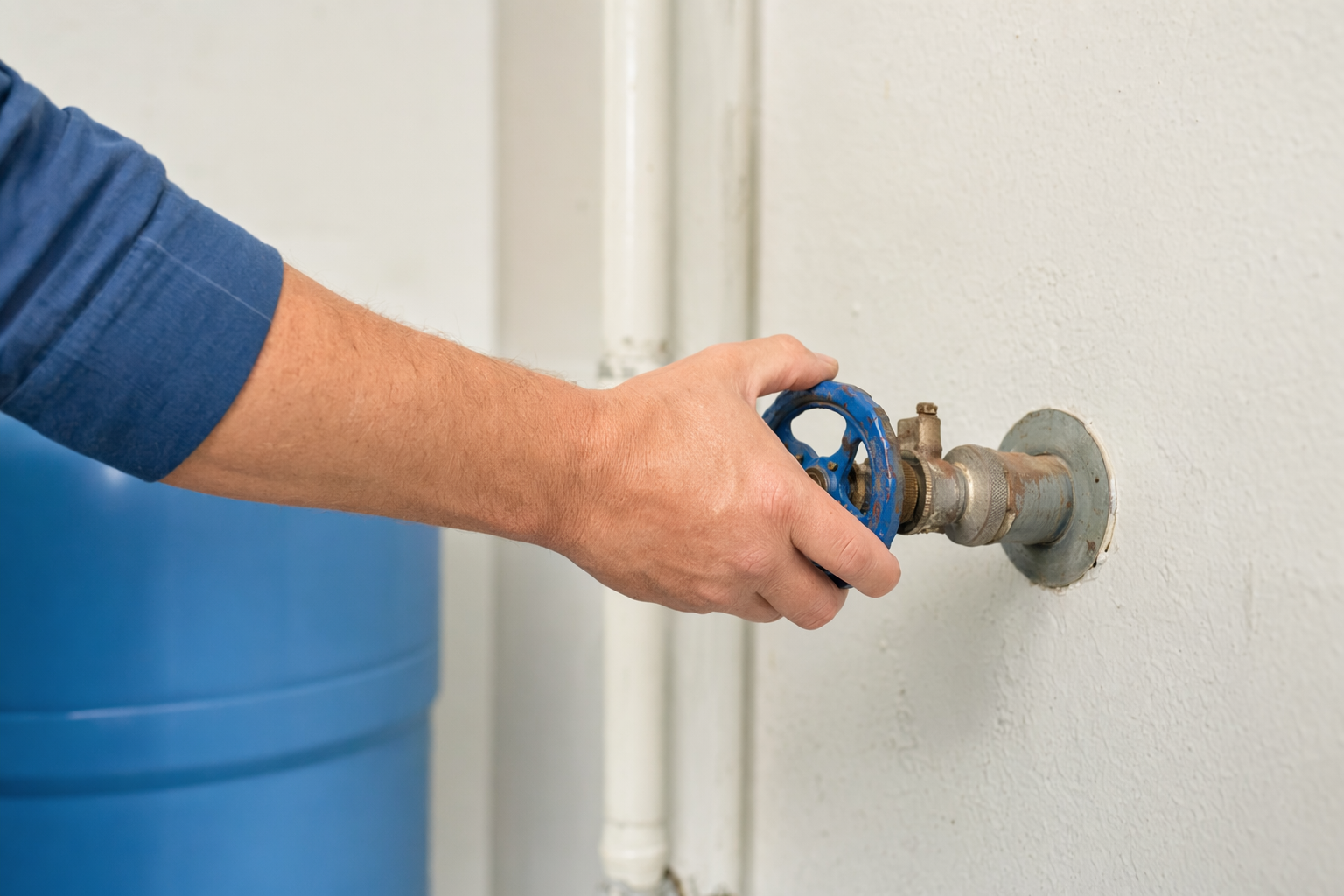
- 1 Shut off the water main. Find your main shut-off valve — usually where the water line enters, near the street, the basement, or the meter — and turn it fully clockwise to stop the flow.
- 2 Stay safe. Keep clear of standing water near outlets or appliances. If you smell gas or see water near electrical panels, leave and call emergency services first.
- 3 Limit the damage. Open a low faucet to drain the lines, move valuables, and soak up water you can reach safely. Take a few photos for your records.
- 4 Get a licensed plumber. Get matched, free, with a licensed 24/7 plumber near you. Ask for the price in writing before work starts — you compare and choose who to hire.
What to do right now
- Check one cold-water faucet and one hot-water faucet in different parts of the home. If nothing comes out anywhere, treat it like a whole-house problem.
- Ask: is this only your home, or also your neighbors? If neighbors also have no water, it may be a utility or building issue.
- Look for the main shutoff valve. Make sure it was not turned off by mistake. If you need help finding it, see how to shut off your water.
- If you see flooding, a burst pipe, or water near live electrical equipment, leave the area and call your local emergency number first.
- If you smell gas, leave right away and call your local emergency number first.
- If there is no visible danger, contact your water utility, landlord, property manager, or HOA if that applies. Then get a licensed, insured emergency plumber if the cause is inside the home or you are not sure.
- Save receipts and take a few photos if you see leaks, wet walls, or other damage.
What no water in the whole house could mean
Sometimes the cause is outside your home. A city water main break, utility shutoff, frozen service line, unpaid-bill shutoff, or building plumbing work can stop water to the whole property.
Sometimes the problem is inside the home. Common examples are a closed main valve, a failed pressure regulator, a broken well pump, a clogged filter, frozen pipes, or a major hidden leak that changed pressure or led someone to shut the water off.
If you have a well, "no water" can point to the pump, pressure tank, switch, low well yield, or a power issue. If you are on city water, the cause is more often a utility interruption, main valve issue, regulator problem, or a serious plumbing failure.
This page is general information only. A licensed plumber or your water provider can tell you what applies in your area.
When it is a true plumbing emergency
It is usually an emergency if you have no water and also have another urgent problem: freezing weather, a burst pipe, active leaking, sewage backup, a medical need for running water, or signs that the problem could damage the home quickly.
It is also urgent if only your home is affected, you cannot find a simple reason, and the loss of water happened suddenly. A plumber may need to find out whether a valve failed, a pipe froze, a line broke, or a pressure problem is happening.
It may be able to wait a little if the utility already confirmed an outage affecting the area, or if your landlord or building manager says planned work is underway and gives a clear update. Even then, if water does not come back when expected, call again and consider a licensed plumber.
If you are not sure, start with the safest, simplest checks and then use emergency plumbing help or get matched to find a licensed, insured 24/7 plumber near you.
What a plumber may check
A licensed plumber may start by confirming whether the problem is on the utility side, at the main shutoff, or somewhere inside the plumbing system. They may check pressure, valves, visible leaks, filters, regulators, and basic supply conditions.
In a well-water home, they may also look at the pump, pressure tank, switch, and whether the system has power. In cold weather, they may look for frozen sections of pipe. If there are signs of a broken underground line, more testing may be needed.
The exact fix depends on the real cause. That is why it is smart to get the price in writing before work starts and ask what is diagnostic work, what is repair work, and what parts may be needed.
Honest cost range for 'no water' problems
Costs vary a lot because "no water" can be simple or serious. A basic emergency diagnostic visit may be around $150 to $400 in many areas. After-hours, weekends, holidays, travel distance, and local labor rates can raise that.
If the problem is a shutoff valve, pressure regulator, frozen exposed pipe, or a smaller accessible repair, the total may fall roughly in the $250 to $1,200+ range. If the issue involves a well pump, pressure tank, underground line, wall access, major leak repair, or more complex parts, the cost can rise to $1,500 to $5,000+.
These are general ranges, not quotes. The real number depends on the cause, the time of day, the parts, how easy the repair is to reach, and your area. You can read more at plumbing costs.
Be careful with vague pricing, scare tactics, cash-only demands, no proof of license or insurance, or pressure to approve a very large repair immediately. A good practice is to ask what they think the likely problem is, what the diagnostic fee covers, and to get the repair price in writing before work begins.
- After-hours usually costs more
- Underground, wall, or well-system work can cost much more
- Get the price in writing before work starts
How MainLine Match helps
MainLine Match is a free matching service, not a plumbing company, licensed plumber, or contractor. We do not perform plumbing work. We help connect households with licensed, insured, 24/7 emergency plumbers near them.
The service is free for the household. To help match you, we collect contact and problem details only: name, phone, optional email, problem type, ZIP code, and preferred language.
You stay in control. Ask the plumber to confirm license and insurance, explain the likely cause, and give the price in writing before work starts. You choose who to hire, and you confirm the work is done before paying the final amount.
If you need help now, use get matched and describe that you have no water anywhere in the home.
If your whole house suddenly has no water, check whether it is only your home, stay safe, contact the utility or building if needed, and get a licensed, insured plumber if the cause may be inside the home.
Common questions
Why do I suddenly have no water anywhere in my house?
Common reasons include a utility outage, a closed main valve, frozen pipes, a pressure regulator problem, a major leak, or a well-system issue. If neighbors also have no water, the problem may be outside your home.
Is no water in the house an emergency?
Sometimes yes. It is more urgent if the loss of water is sudden, only your home is affected, freezing weather is involved, or you also have leaking, a burst pipe, sewage, or a medical need for running water.
Should I call the water company or a plumber first?
If the whole area may be affected, call the water utility or building manager first. If the issue seems limited to your home or the utility says service is normal, a licensed plumber is usually the next call.
Can I turn my water main back on myself?
If someone shut it off by mistake and there is no sign of damage, you may be able to check the valve position. If you are unsure, or if there may be a leak or frozen pipe, stop and call a licensed plumber.
How much does it cost to fix a no-water problem?
A diagnostic visit may be around $150 to $400 in many areas, and repairs can range from a few hundred dollars to several thousand depending on the cause. These are general ranges only, not quotes.
What should I ask before I hire an emergency plumber?
Ask if they are licensed and insured, what the diagnostic fee covers, whether after-hours rates apply, and what the estimated repair price is before work starts. Get the price in writing first.