Guides
Getting plumbing work and prices in writing
Before any plumbing work starts, ask for the full price and what will be done—in writing. This helps you avoid surprises and scams, especially during emergencies.
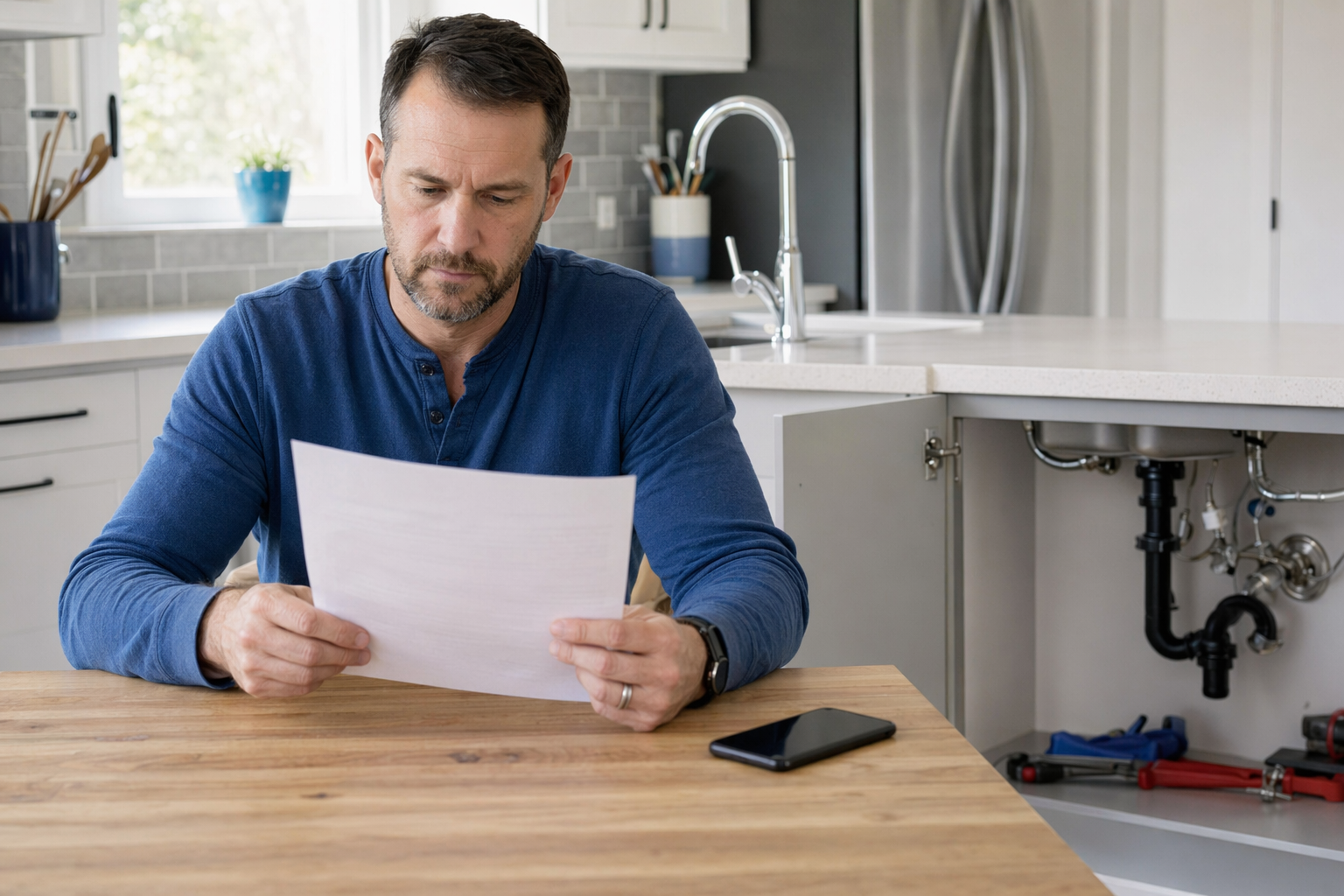
What to do first (quick checklist)
1. Ask the plumber for a written document (estimate or work order) before work begins.
2. Confirm the scope: what problem they will fix, what parts they plan to use, and what “done” means.
3. Confirm the price: total cost (labor + parts + fees) and whether there are any extra charges if more damage is found.
4. Verify license and insurance, and make sure you can read the name/company on the paperwork.
5. Only approve the work you understand—then sign or confirm you agree to that exact scope and price.
- If they won’t put it in writing, pause and ask why.
- If they pressure you to approve a big repair immediately, slow down and get details in writing.

Why written pricing matters (even in a rush)
In a plumbing emergency, it’s normal to feel stressed and want help right away. But “help right away” should still include clear paperwork—so you’re not stuck with an unclear bill later.
A written scope and price protects you if the job changes. For example, what starts as a clog might involve additional access, replacement parts, or more cleanup. The goal is to understand what they expect to do now, and what would trigger extra work later.
MainLine Match is a free matching service that connects you with licensed, insured, 24/7 emergency plumbers near you—but we don’t perform plumbing work and we can’t control a plumber’s pricing. Getting it in writing stays in your hands.
What a “good” written estimate should include
Look for documents that clearly describe both the problem and the planned solution. A fair written estimate doesn’t have to be fancy, but it should be specific enough that you can compare it to the final bill.
Try to make sure it includes:
- Address/ZIP and the date/time
- Your name and contact info (just for the job)
- The specific diagnosis or description of the issue (for example: “leaking supply line under sink,” “no hot water due to water heater problem,” “sewage backup—main line clog suspected”)
- The scope of work and what will be done (steps, not vague wording)
- Parts and equipment listed (or a note like “parts included” with what that means)
- Total price or a clear breakdown (labor + parts + service fees)
- Any conditions that could change the price (like additional excavation, additional line segments, or longer cleaning time)
- Payment terms and how you’ll confirm the work is complete
What can change the price (so you’re not surprised)
Even with a good written estimate, real plumbing work can uncover extra damage. Prices often move because of time, access, parts, and cleanup.
Common factors that can raise cost include:
- After-hours and emergency dispatch (evenings, nights, weekends)
- Hard-to-reach leaks (walls, floors, tight spaces)
- Hidden water damage or additional remediation needs
- The need for additional parts (valves, fittings, replacement sections of piping)
- Longer on-site time to fully clear a clog or confirm flow
- Cleanup after sewage backups (a bigger job than a simple drain issue)
A clear document should explain what may add cost and what you would need to approve.
Red flags to watch for (possible overcharging or scams)
If something feels off, trust that instinct. These are common red flags people report during plumbing emergencies.
Red flags include:
- No written estimate/work order before starting
- “One price” spoken quickly, but the final bill changes with unclear explanations
- Scare tactics like “You must replace everything right now” without showing what failed
- Vague pricing (“labor and materials”) with no specifics
- Cash-only pressure or refusing normal payment methods without reason
- No license/insurance information or refusal to verify it
- Pressure to approve a huge repair on the spot before you can read the paperwork
If any of these happen, pause and ask for a written itemized price before you agree. You can also ask for a plain-language explanation of each line item.
How MainLine Match helps (and what we don’t do)
MainLine Match is a FREE multilingual matching service. We collect contact details and your problem type and ZIP code so we can connect you with licensed, insured emergency plumbers near you.
We do not perform plumbing work, and we can’t guarantee a specific outcome or a specific arrival time. We also can’t provide exact prices for your situation. What we *can* do is help you reach a plumber quickly, then you can focus on getting clear scope and written pricing before work starts.
If you’re still choosing who to hire, review the written estimate and confirm the scope matches your understanding. You stay in control: you confirm the price before work begins and confirm the work is done before paying the final amount. If you want quick next steps, see what to do in plumbing emergencies and how to get matched.
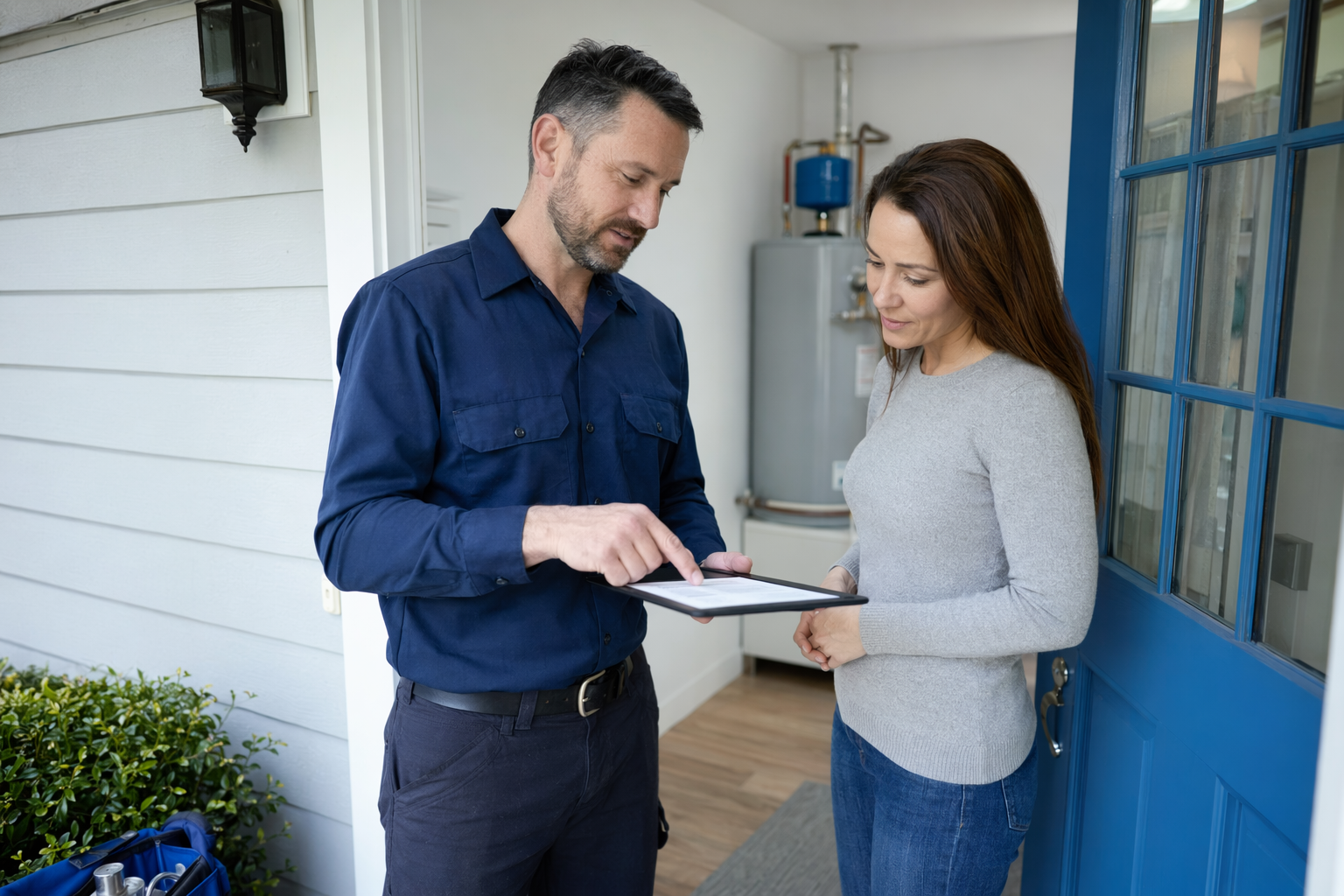
Ask for a written scope and total price before any work starts, so you can avoid surprises—especially during emergencies.
Common questions
Should I sign the estimate right away during an emergency?
You can sign if the document clearly matches the problem, scope, and total price (or clear conditions for extra cost). If anything is vague or missing, ask for the details in writing before you approve.
What if the plumber says the price will be different after they “look”?
That can happen, but it should be explained in the estimate as conditions (what they’ll confirm, what might change, and what you would need to approve). Get the written baseline price first, then ask what could add cost.
Is a written estimate always a final price?
Not always. Many estimates are “estimate” until the diagnosis is confirmed and the work is completed. The key is that you get a written document that clearly states what’s included and what changes would trigger extra charges.
What should I ask for if I don’t understand the wording?
Ask them to explain the scope and each charge in plain language, and point to the exact lines on the written document. If there’s a language barrier, ask for your preferred language (or bring a translator if possible).
How much does emergency plumbing work cost?
Costs vary by problem type, location, time of day (after-hours costs more), and what repairs or parts are needed. For general ranges, see [plumbing emergency costs](/costs/). Ranges are not quotes.