Quick answers
How do I stop a burst pipe from flooding?
If a pipe has burst, the fastest way to stop the damage is to shut off your water supply right now. Then focus on safety and limiting water spread while you connect with a licensed, insured emergency plumber.
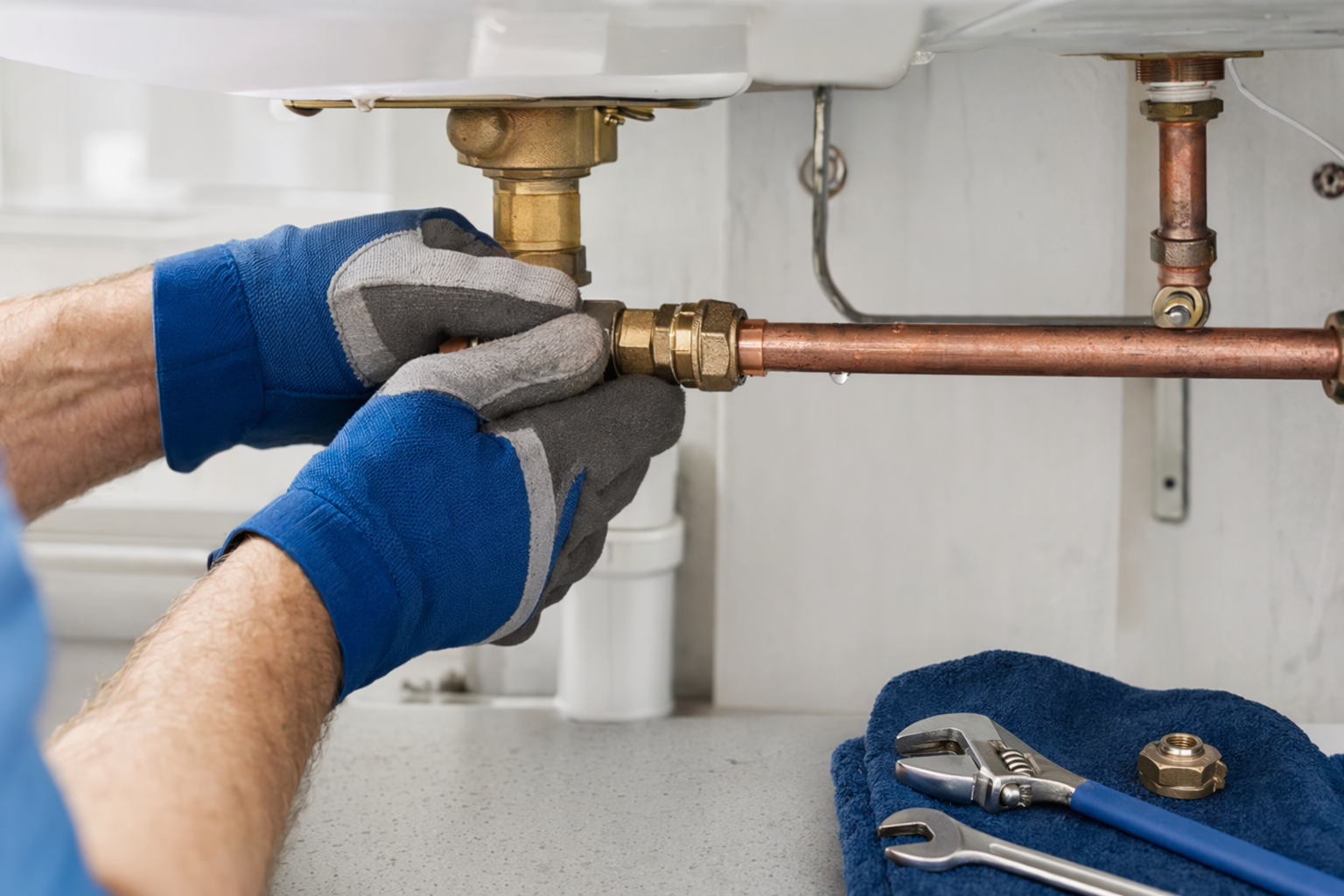
What to do right now (to stop the flooding)
1. Shut off the main water supply if you can: turn the main valve off (usually near your water meter or where the main line enters your home).
2. Turn off the water to the affected area too, if you have a shutoff valve for that fixture (sink, toilet, or the shutoff handle behind the device).
3. Unplug/avoid electricity near water: if water is near outlets, appliances, or power cords, keep people away and don’t step through standing water.
4. Open drain valves only if it’s safe and you can do it without getting near live electrical areas—otherwise, just keep people out of the wet area.
5. Reduce damage: move belongings away from the water path, use towels/buckets if it’s safe, and turn off HVAC/boilers only if your home’s manual directs you to do so (for gas or electrical uncertainty, wait for a licensed professional).
6. If you see sewage back up, have strong odor, or water is entering electrical areas, leave the area if needed and call your local emergency number first. Then get a plumber immediately.
- If you can’t find the main shutoff fast, turn off the water at the closest shutoff you can reach—every minute helps.
Quick triage: figure out what kind of problem you have
A “burst pipe” can still look different depending on where the pipe is and how bad the leak is. Your goal is to describe it clearly to the plumber and to stop the water flow.
Look for clues:
- Is the water coming from a specific spot (a ceiling stain, a wall area, a visible pipe, under a sink)?
- Is it spraying/streaming quickly (active rupture) or slowly (weeping)?
- Is it clean water (supply line) or dirty water (possible drain/sewer issue)?
If you’re not sure, that’s okay. You can still share what you’re seeing—where the water is, when it started, and whether it’s clean or dirty—with your matching service and your plumber.
How to limit damage while you wait
Even before a plumber arrives, small actions can reduce damage. Focus on water control and safety, not repairs.
What you can usually do:
- Place a bucket under the leak if it’s safe and won’t put you near electrical hazards.
- Wipe up puddles and remove wet items from the direct water path.
- If there’s water in a ceiling/wall area, keep people out of that room and don’t cut into drywall yourself.
What to avoid:
- Don’t start opening walls, floors, or ceilings to “find the pipe.”
- Don’t use stop-leak products or patches unless a licensed plumber tells you to (some can complicate repairs).
- Don’t assume the leak is fixed just because the water slows down—water can keep moving inside walls or floors.
Get an emergency plumber (licensed, insured, 24/7 when needed)
MainLine Match is a FREE multilingual matching service. We don’t do plumbing work and we don’t replace a licensed, insured plumber—but we can help connect you with 24/7 emergency options near your ZIP code.
To get matched quickly, you’ll share contact info and your problem type (burst pipe/flooding/no water), plus your ZIP code and preferred language. We only collect the details needed to connect you—never payment account numbers or sensitive records.
When you talk to a plumber, be ready with:
- Where the leak is (room/area) and what you see
- When it started and whether the main water is off
- Whether the water looks clean or dirty
- Any photo or short description you can provide (if asked)
Helpful tip: confirm licensing and insurance before work starts.
Cost expectations (what usually affects price) — not a quote
Emergency plumbing costs can be higher than normal because it’s after-hours, urgent, and sometimes more labor is needed to prevent further damage. Any number you hear should be treated as an estimate until the plumber inspects the problem.
Typical cost ranges often vary by area and the specific repair. As a general guide, emergency repairs commonly fall into rough ranges such as:
- Minor leak/repair (example: a small accessible supply leak): about $150–$400
- Repair after inspection (example: replacing a section of pipe or fittings): about $300–$900
- More extensive work (example: leak in a wall/ceiling, shutoff complications, or multiple areas): about $800–$2,500+
Prices can go up if:
- It’s after-hours/overnight or a holiday
- The leak is hard to access (walls, ceilings, slab)
- There’s water damage that needs additional drying/cleanup (often separate from plumbing)
- Replacement parts are specialized
Before you agree to anything:
- Get the full price in writing (including any trip/diagnostic fee)
- Confirm what’s included (parts, labor, cleanup)
- Ask for alternatives if options exist
Red flags to watch for (avoid overpaying or getting unsafe work)
Most plumbers are honest—but in emergencies, scammers can try to rush you or inflate the cost. If anything below sounds off, slow down and verify details.
Red flags include:
- “We can’t tell you the price until we start,” followed by vague numbers that keep changing
- Pressure to authorize a large repair right away without explaining the problem
- Cash-only demands, or refusal to provide licensing/insurance
- No clear itemization of fees (diagnostic, labor, parts, disposal)
- Scare tactics like “You must replace everything now” with no clear explanation
Household stays in control: you confirm the price before work starts, and you confirm the work is done before paying the final amount.
Shut off your water main first, keep people away from any electrical danger, limit water damage, then use MainLine Match to connect (for free) with a licensed, insured 24/7 emergency plumber near you.
Common questions
I shut off the water main, but water is still coming out—what should I do?
That can happen if water is trapped in pipes or building cavities and drains out slowly. Keep people and belongings away, avoid electrical areas, and call an emergency plumber. Share that you shut off the main and whether the water looks clean or dirty.
Should I turn off the power or HVAC when a pipe bursts?
Only do what your home’s guidance/manual says and what you can do safely. If water is near outlets, appliances, or electrical equipment, keep away and wait for licensed professionals. For anything involving gas or if you smell gas, leave the area and call your local emergency number first.
How fast should I call a plumber for a burst pipe?
Call as soon as the water is shut off or while you’re trying to shut it off—minutes matter for damage. Emergency plumbers are often 24/7, but arrival time depends on demand in your area.
How much will it cost to fix a burst pipe?
Costs vary a lot based on access (easy vs. in-wall/in-ceiling), parts needed, and whether it’s after-hours. Common emergency repair ranges are often roughly $150–$400 for minor accessible leaks, $300–$900 for more typical repairs, and $800–$2,500+ for harder access or bigger jobs—still not a quote. Get the total price in writing after inspection.
Can MainLine Match fix the pipe for me?
No. MainLine Match is a FREE matching service that helps connect you with licensed, insured emergency plumbers near you. We don’t perform plumbing work.