Quick answers
I have no hot water — what should I check?
No hot water can be stressful, but you can usually narrow down the cause fast. Check the items below first, then use [get matched](/get-matched/) to reach a licensed, insured 24/7 emergency plumber if needed.
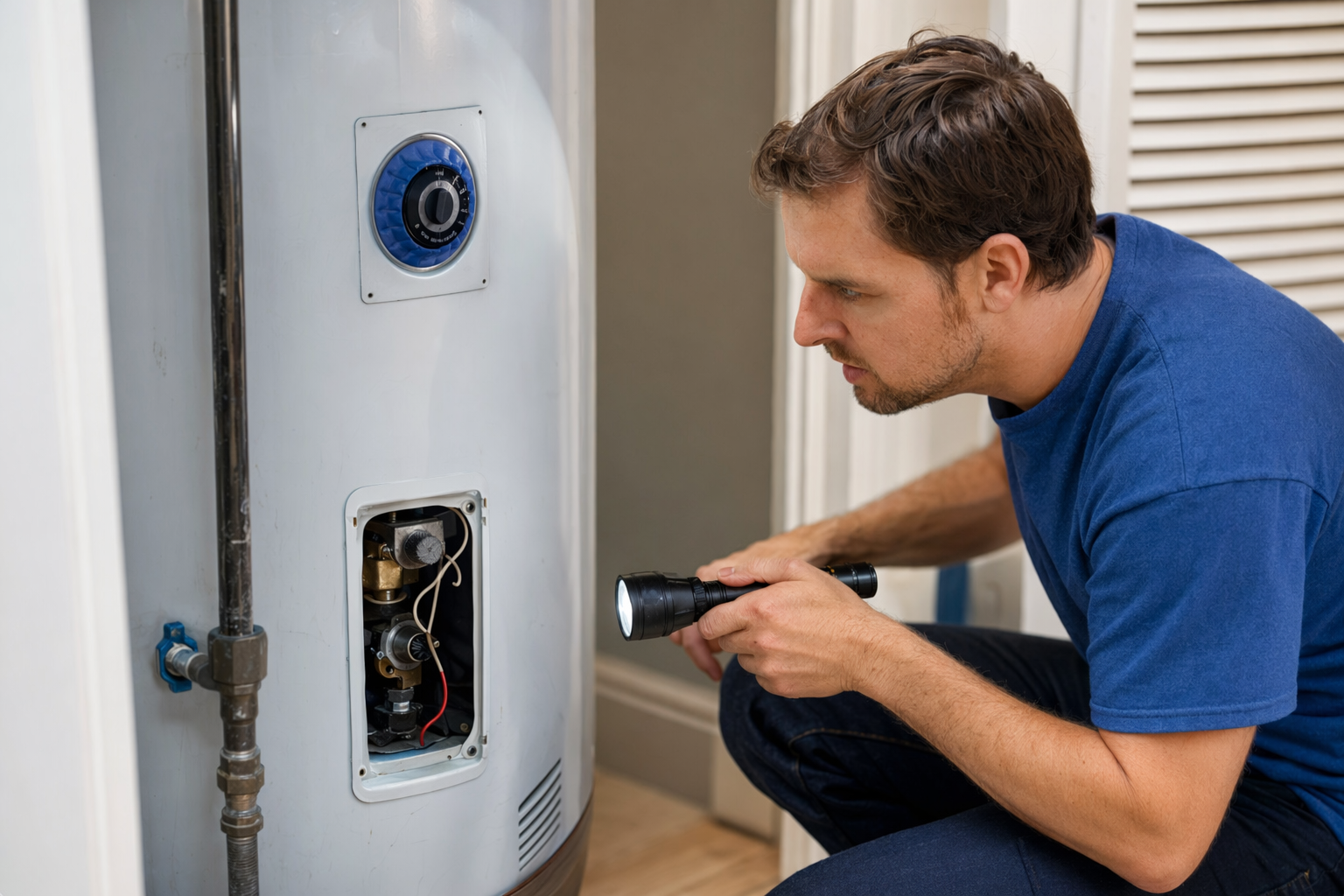
What to do right now (quick checks)
- Check another faucet (hot water) in a different room to see if the problem is whole-house or just one fixture.
- Look for an obvious setting change: did anyone recently switch the thermostat, turn off the heater, or change power?
- Check the water heater area for warning signs (burning smell, smoke, sparks). If you notice anything unsafe or a gas odor, stop and follow local emergency guidance.
- If you can, confirm whether cold water still runs normally at your sinks/showers. If there’s no water at all, that’s a different emergency.
If the problem seems whole-house and hot water is not coming back after your quick checks, it’s time to call a licensed, insured plumber—especially if you need hot water for bathing, sanitation, or laundry.
- If you smell gas or see sparks/smoke: leave the area and call your local emergency number first.
Start with the simplest causes
Hot water problems are often caused by something straightforward—like the heater being turned off, a control setting being wrong, or a power issue. Before assuming a major repair, do these basics:
- Confirm cold water is working normally.
- Try hot water at 2 different fixtures (for example, kitchen sink and a bathroom sink).
- Wait a few minutes after turning a faucet on—sometimes hot water systems need time to respond.
These checks help you understand whether you have a “heater/control problem” or an “issue at one fixture.”
- Whole-house no hot water is more likely to be the water heater or its controls.
Common things to check with the water heater (general info)
Because there are different types of water heaters (gas, electric, tank vs. tankless), your exact steps may vary. Still, plumbers generally look at a few common areas when there’s no hot water.
- Thermostat/temperature setting: make sure it’s not turned down or set to “off.”
- Power or ignition (where applicable): many systems require power to control heating; some rely on a pilot/igniter.
- Error lights or alarms: tankless units often show a code when there’s a problem.
- Reset options: some heaters have a reset button or procedure.
If you see an error code or unusual behavior (no flame where there should be one, repeated blinking, unusual noises), write down what you see. That information helps a plumber diagnose faster.
- If you’re not sure what you’re looking at, it’s okay to stop and call a licensed, insured pro.
When to call a 24/7 emergency plumber
Call for help sooner rather than later if any of these are true:
- Hot water is completely out in the whole home and does not return after basic checks.
- The heater shows warning lights, error codes, or repeated shutoffs.
- You hear loud banging, rumbling, or notice leaks around the water heater.
- Hot water returns briefly and then stops again.
A plumber can check the heater safely, identify the cause, and discuss repair options. MainLine Match is not a plumbing company—we connect you (for free) to licensed, insured emergency plumbers near you.
- If the issue is only one faucet, you may still need a plumber, but it may be less urgent than a whole-house failure.
How much this may cost (honest ranges, not quotes)
Costs for no hot water vary a lot based on your heater type, the cause, parts needed, your location, and whether you need after-hours service. Emergency calls are often more expensive than daytime appointments.
General range (not a quote):
- A basic diagnostic/service call: often about $100–$250+.
- Minor repairs or adjustments: commonly $200–$500+.
- Replacing a component (or a more involved repair): can be $500–$1,500+.
- Full water heater replacement (tank or tankless): often $1,500–$4,000+ depending on type, capacity, installation needs, and local costs.
These are broad ranges. A plumber should confirm the problem, then explain options and the expected price. Avoid surprises by asking for the total cost before work starts, and get it in writing when possible.
- If someone pressures you into an expensive repair on the spot or won’t provide a clear written price—pause and ask questions.
How to get matched with a licensed, insured plumber (free)
MainLine Match is a free matching service for households. We collect contact details and the type of problem (like “no hot water”), plus your ZIP code and preferred language, then connect you with nearby emergency plumbers who can help.
To get matched, use get matched and provide:
- Your name and phone number (optional email if you want)
- Your ZIP code
- The problem type (“no hot water”)
- Your preferred language
Then, talk with the plumber before authorizing work. The household stays in control—you confirm the price before work begins and confirm the work is completed before paying the final amount.
- Need more guidance first? See [guides](/guides/) or [help](/help/).
Check a couple faucets and whether cold water works, then if you still have no hot water, call a licensed, insured 24/7 plumber via MainLine Match for free connection.
Common questions
Hot water stopped suddenly—does that mean the water heater is broken?
Not always, but a sudden whole-house stop often points to a water heater control/power/ignition issue. If cold water still runs normally and you don’t get any hot water at multiple faucets, it’s a good idea to call a licensed, insured plumber.
If I have no hot water, should I shut off anything?
If you see leaks, warning signs, sparks/smoke, or smell gas, follow local emergency guidance and contact emergency services first. For other situations, it’s usually best to wait for the plumber’s instructions rather than guessing—especially with gas or electrical components.
Why does hot water work for a short time and then stop?
That pattern can happen when a heater is repeatedly shutting down due to a fault, an error condition, or a component problem. A plumber can diagnose the cause and recommend safe repair options.
What should I tell the plumber on the phone?
Tell them: whether the problem is whole-house or only one fixture, whether cold water works, the heater type if you know it (tank/tankless, gas/electric), any error lights or codes, and when it started. This helps them estimate the right approach.
Are there red flags for scams or overcharging?
Yes. Red flags include vague pricing (“it depends”), cash-only pressure, no license/insurance, scare tactics, or pressure to authorize a large repair immediately. Ask for the full price in writing and confirm you agree before any work starts.
Is MainLine Match a plumbing company?
No. MainLine Match is a free matching service that connects you to licensed, insured plumbers. We don’t do plumbing work and we can’t guarantee price, arrival time, or the outcome.