Quick answers
My water heater is leaking — what do I do?
If your water heater is leaking, start by protecting your home and turning off the water so you can limit damage. Then we’ll help you get matched with a licensed, insured 24/7 emergency plumber near you.
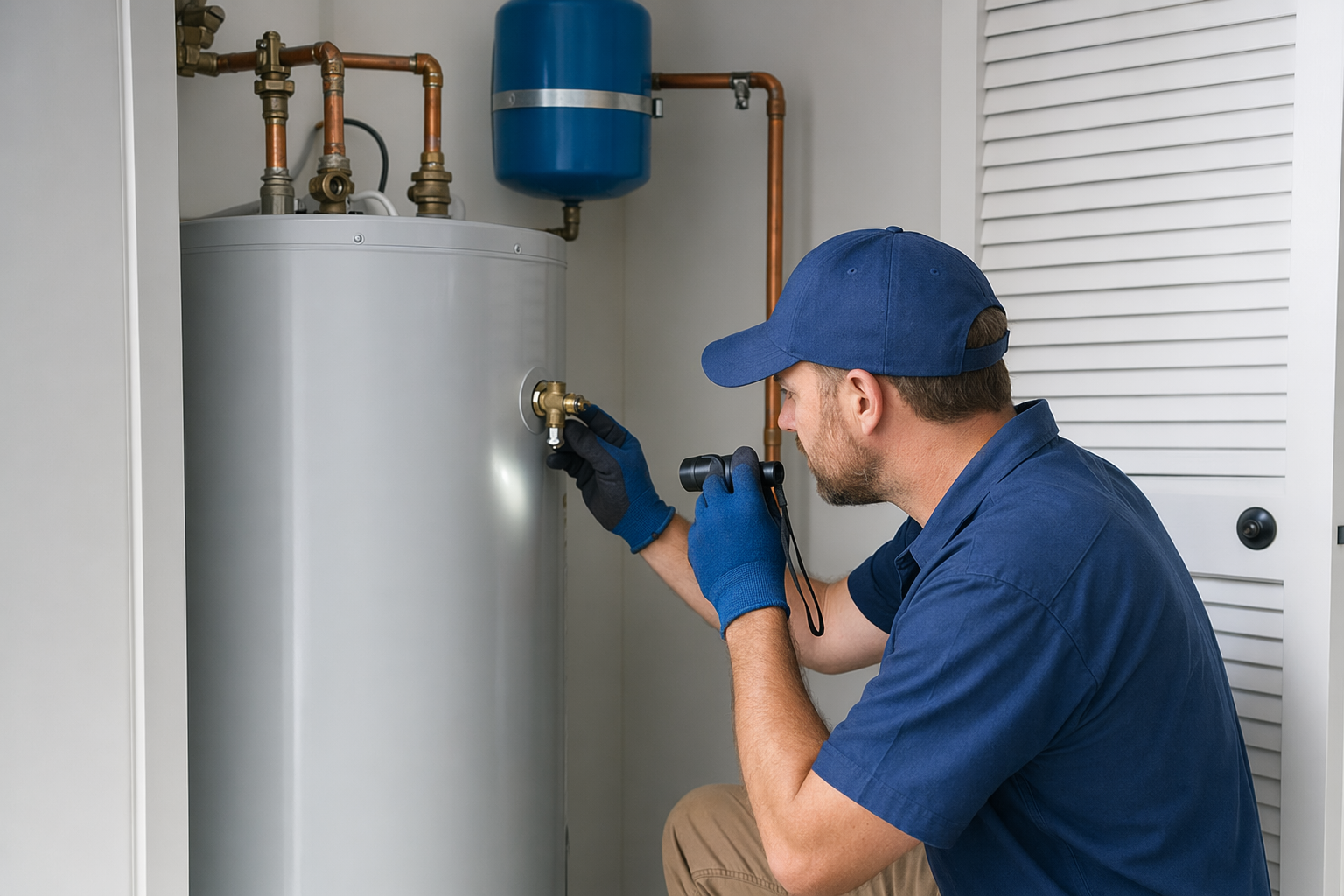
What to do right now
- Turn off the water supply to the water heater (usually a valve on the pipe going into the tank).
- If you can do it safely, turn off the heater’s power source: gas control switch to OFF, or turn off the electric breaker for the heater.
- Place a bucket/towels under the leak and try to stop water from spreading (move items away from the floor area).
- Do NOT ignore it if water is near electrical outlets, switches, wiring, or the heater’s control panel—stop and get help.
- If you smell gas, leave the area and call your local emergency number first.
- MainLine Match is a FREE matching service (not a plumber). A licensed, insured professional should check leaks—especially on gas units.
Why a leaking water heater matters
A leak can mean a simple issue (like a loose connection or a small problem with a valve), or it can signal something that needs repair soon (like a failing tank or pressure-related issues).
Even a “small” drip can become a bigger problem: it can damage floors, cause mold, and lead to no hot water for the household. The safest approach is to limit water and get a plumber to inspect it as soon as possible.
- If the leak is actively getting worse, treat it as urgent.
Quick checks you can do without taking anything apart
You don’t need to open panels or remove parts. Just gather simple info for the plumber.
Look for:
- Where the water appears to come from (top, side, bottom, near pipes)
- How much it’s leaking (slow drip vs. steady flow)
- Whether you see corrosion, rust, or water around the base of the tank
- Whether you still have hot water or water pressure
If you can do it safely, take a few photos for the plumber. This helps them understand the situation faster.
When to call now vs. when to schedule soon
Call a 24/7 emergency plumber right away if:
- The leak is heavy, pooling water, or spreading across the floor
- You see water near electrical components or outlets
- You suspect a gas water heater has an issue (especially any gas smell)
- The unit is venting improperly or you’re unsure what type of heater it is
If the leak is very small and contained, it may still need prompt service, but you can sometimes schedule within the next day. The main point: don’t let it keep leaking unattended.
- Rules and responsibilities can vary by area—your plumber will follow local codes.
How to get matched with a licensed 24/7 plumber (free for you)
Use MainLine Match to connect with nearby emergency plumbers who can inspect and repair your leaking water heater. You’ll provide contact info and the problem type (no sensitive financial data).
To get started, choose your preferred language and ZIP code, then describe the issue (for example: “water heater leaking from the base” or “leaking near the pipes”). You can use get matched now.
What repair may cost (honest ranges, not quotes)
Costs vary a lot based on the exact cause, tank condition, parts needed, and whether the plumber is coming after-hours. These ranges are meant to help you plan—not to guarantee a price.
Typical factors that can raise or lower the cost:
- After-hours or emergency call (evenings/weekends often cost more)
- Whether it’s a gas or electric unit
- Repair vs. full replacement
- How hard the issue is to reach (tight spaces, older plumbing)
- Parts availability and the model/age of the heater
If your plumber ends up recommending replacement, ask for a clear breakdown: labor, parts, any disposal/removal fees, and warranties. For more about pricing, see plumbing costs.
- Ranges are not quotes—ask the plumber for the confirmed price before work starts.
Avoid common scams and overcharging
In a real emergency, it’s easy to feel pressured—so here are red flags to watch for:
- Vague pricing with no clear explanation of what they’ll do
- Scare tactics to push a huge repair immediately
- Cash-only requests or no valid license/insurance
- Refusal to put the price and scope in writing
- “We can’t confirm anything” but still asking you to authorize costly work on the spot
You stay in control: confirm the price before work starts, confirm the work is done, and only pay the final amount you agreed to.
- If anything feels off, ask for details and get a second opinion if time allows.
Helpful links and next steps
If you’re not sure what type of heater you have or what to tell the plumber, you can browse more guidance in guides and general help at help.
Once you’re safe and the water is shut off, the fastest path is: describe what you see (location of leak + how fast), share photos if you have them, and hire a licensed, insured plumber to inspect it.
Turn off the water to the leaking water heater, keep things safe, and then use MainLine Match to find a licensed, insured 24/7 plumber near you—cost depends on the cause and timing.
Common questions
My water heater is leaking at the bottom—should I shut off the water?
Yes. Turning off the water supply to the heater is usually the most helpful first step to limit damage. After that, get a licensed, insured plumber to inspect the cause.
Is it safe to keep using hot water if the heater is leaking?
It’s usually better not to keep operating as normal if it’s actively leaking. Shut off the water to the heater (and power if you can do so safely), then contact a plumber.
What if it’s a gas water heater and I’m not sure where the leak is coming from?
If you smell gas, leave and call your local emergency number first. If there’s no gas smell but the heater is leaking, still treat it as urgent and have a licensed, insured plumber check it.
How much will it cost to fix a leaking water heater?
There’s no one fixed price. Repair vs. replacement, parts, model/age, and emergency/after-hours timing all affect cost, and the real number depends on what the plumber finds—so ranges are not quotes.
How do I know if a plumber is legitimate?
Ask for their license and insurance details and confirm the scope and price in writing before work starts. If you’re being pressured into a huge repair without clear explanations, that’s a red flag.