Services
Finding and fixing hidden leaks
Water showing up where it should not be can get expensive fast. Start by stopping the water if you can, then get help finding the leak before damage spreads.
What to do right now
- If water is actively flowing, shut off the main water supply if you can do so safely.
- If water is near outlets, cords, or appliances, leave the area and call your local emergency number first.
- Move towels, buckets, and small items to limit damage. Take a few photos if it is safe.
- If you rent, notify the landlord or property manager right away.
- Then use MainLine Match to get connected with a licensed, insured plumber near you. We are a free matching service, not a plumbing company, and we do not perform repairs.

What a hidden leak is
A hidden leak is water escaping from a pipe you cannot easily see. It may be behind a wall, under a floor, above a ceiling, inside a crawl space, in the yard, or under a concrete slab.
Some hidden leaks are small and slow. Others can waste a lot of water and damage drywall, flooring, cabinets, insulation, or the foundation area over time. Even when there is no dramatic flooding, a hidden leak can still be urgent.
A plumber's job is usually two parts: first, find the source of the leak as accurately as possible, and second, repair the damaged pipe or fitting with the least practical disruption.
Common signs you may have a hidden or slab leak
Sometimes the sign is obvious, like a wet ceiling or a warm spot on the floor. Other times, people only notice a higher water bill or the sound of running water when nothing is on.
A hidden leak is more likely if you notice one or more of these signs:
- Water bill suddenly goes up without a clear reason
- You hear water running when faucets and appliances are off
- Wet spots, bubbling paint, peeling wallpaper, or stained ceilings
- Musty smell, mold smell, or repeated damp areas
- Warm or wet spots on the floor
- Low water pressure in part of the home
- Cracks, soggy areas, or unusually green patches in the yard
- Water meter keeps moving when no water is being used
How plumbers find a hidden leak
Leak detection usually starts with questions and simple checks. The plumber may ask when you first noticed the problem, whether the water bill changed, and what areas feel damp or sound unusual. They may check the meter, isolate parts of the plumbing system, and look for patterns in pressure loss.
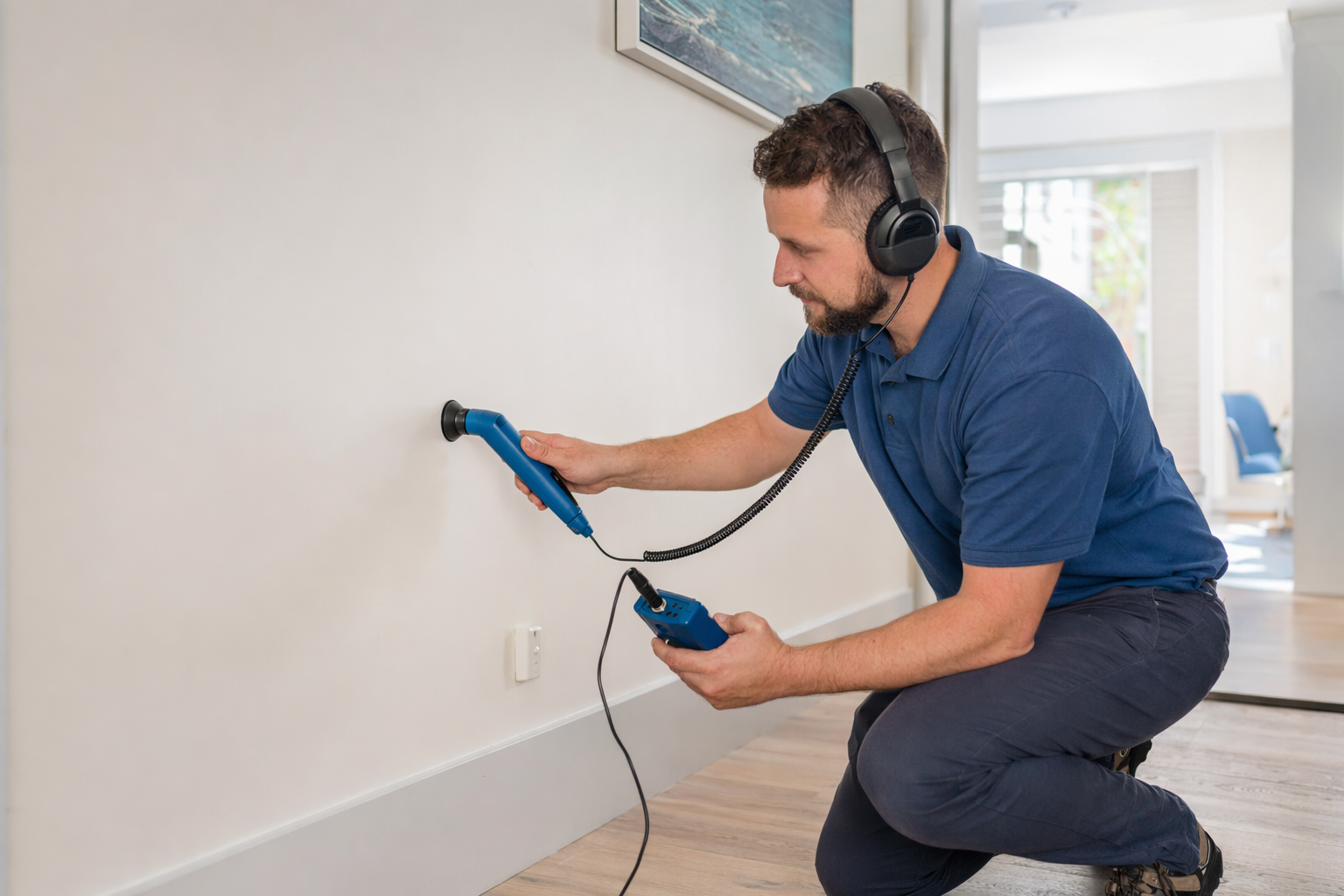
Depending on the situation, a licensed plumber may use tools such as moisture meters, pressure testing, thermal imaging, acoustic listening equipment, or a camera in certain lines. The goal is to narrow down the source before opening walls or floors.
For slab leaks or very hard-to-find leaks, detection can take time. A careful diagnosis may cost more up front, but it can reduce unnecessary cutting and repair work later. Methods vary by plumber, property type, and local conditions.
How hidden leaks are repaired
The repair depends on where the leak is and what failed. A small leak at an exposed fitting may be a straightforward repair. A leak behind a wall may require opening the wall, replacing a section of pipe, and then arranging separate patching work. A slab leak may lead to several options, such as a spot repair, rerouting a line, or in some cases a larger repipe recommendation.
The right option depends on the pipe material, the age of the system, how accessible the leak is, and whether there may be more than one weak area. If a plumber recommends a major repair, ask why that option makes more sense than a smaller fix.
Before work starts, ask for the price in writing, what is included, what is not included, and whether wall, floor, or finish repairs are separate. The household stays in control: you choose who to hire, confirm the price before work begins, and confirm the work is done before paying the final amount.
What leak detection and repair may cost
Costs vary a lot by location, time of day, how hard the leak is to find, and how much repair access is needed. After-hours and weekend calls usually cost more. These ranges are general information only, not quotes.
Typical ranges people may see in the US are:
- Basic leak detection visit: about $150-$500
- More involved hidden leak or slab leak detection: about $300-$1,000+
- Simple visible pipe repair: about $150-$600
- Hidden pipe repair behind a wall or ceiling: about $400-$1,500+
- Slab leak repair or line reroute: about $1,500-$5,000+ or more
- Water damage cleanup, drywall, flooring, or mold work: often separate
The final number depends on the problem, the parts, the area, and the time of service. A plumber cannot responsibly promise a real total before diagnosing the issue. You can read more general pricing information at repair costs.
How to choose a plumber and avoid overpaying
For hidden leaks, it is worth slowing down just enough to verify who you are hiring. Ask if they are licensed and insured for your area, and verify it if your state or local agency provides online lookup. Rules and responsibility for certain lines can vary by area.
Watch for red flags: vague pricing, scare tactics, pressure to approve a very large repair immediately, cash-only demands, or refusal to put the scope and price in writing. If the leak is not creating an immediate safety issue, it is reasonable to ask questions before you authorize major work.
MainLine Match helps connect households with licensed, insured, 24/7 emergency plumbers near them. Our service is free for the household. We only collect contact and problem details like your name, phone, optional email, problem type, ZIP code, and preferred language. Start here if you need help now: get matched or see more urgent help at emergency plumbing.
If you think water is leaking behind a wall, under a floor, or under the slab, shut off the water if needed and get a licensed plumber to find the source before damage gets worse.
Common questions
How do I know if I have a hidden leak or just condensation?
Condensation usually forms in predictable places, like on cold pipes or toilet tanks, and may come and go with temperature or humidity. A hidden leak is more likely if you hear running water, see water stains spreading, notice a musty smell, or your water bill rises unexpectedly.
Is a slab leak an emergency?
It can be. If water is actively flowing, pressure has dropped sharply, flooring is wet, or damage is spreading, treat it as urgent and shut off the water if you can do so safely. A licensed plumber can assess the cause and repair options.
Will a plumber have to break my wall or floor to find the leak?
Not always. Many plumbers try to narrow the location first using testing and detection tools. But some leaks cannot be confirmed or repaired without opening a wall, ceiling, floor, or slab area.
Does homeowners insurance cover hidden leak repair?
It depends on the policy and the cause of the damage. Some policies may help with certain resulting water damage, while the pipe repair itself may be handled differently. Check your insurer and policy details.
Can I keep the water on until the plumber arrives?
If water is actively leaking or damage is spreading, shutting it off is usually the safer choice. If you are not sure, or if water is near electricity, leave the area and call your local emergency number first.
How fast can MainLine Match get me help?
We try to connect you with available licensed, insured plumbers near you as quickly as possible, but we cannot promise an arrival time, a specific plumber, or an outcome. MainLine Match is a free matching service, not a plumbing company.