Services
Water heater repair and replacement
No hot water, leaking tank, or strange noise? Start by protecting people and limiting water damage, then get a licensed plumber to diagnose whether your water heater can be repaired or should be replaced.
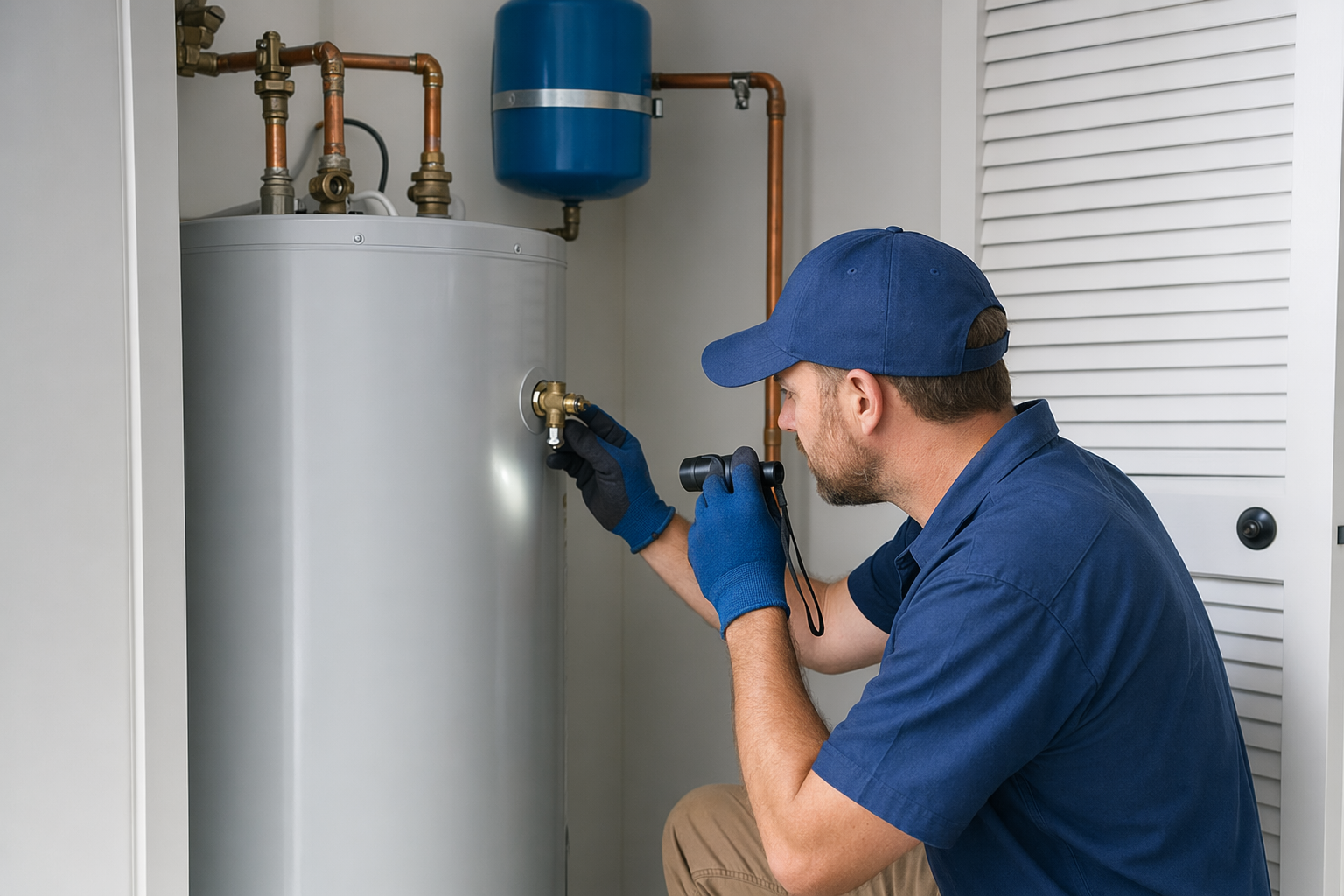
What to do right now
- If water is leaking, shut off the water supply to the heater if you can do it safely. If you cannot stop the leak, shut off the home's main water.
- If there is water near outlets, cords, or electrical equipment, leave the area and call your local emergency number first.
- If you smell gas, leave right away and call your local emergency number or gas utility first.
- Move towels, buckets, and nearby items to limit damage if it is safe to stay.
- Then get matched with a licensed, insured emergency plumber near you.
MainLine Match is a free matching service. We are not a plumbing company, and we do not perform plumbing work.
This page gives general information only. The right repair depends on the heater type, its age, the leak location, local code, and what a licensed plumber finds on site.
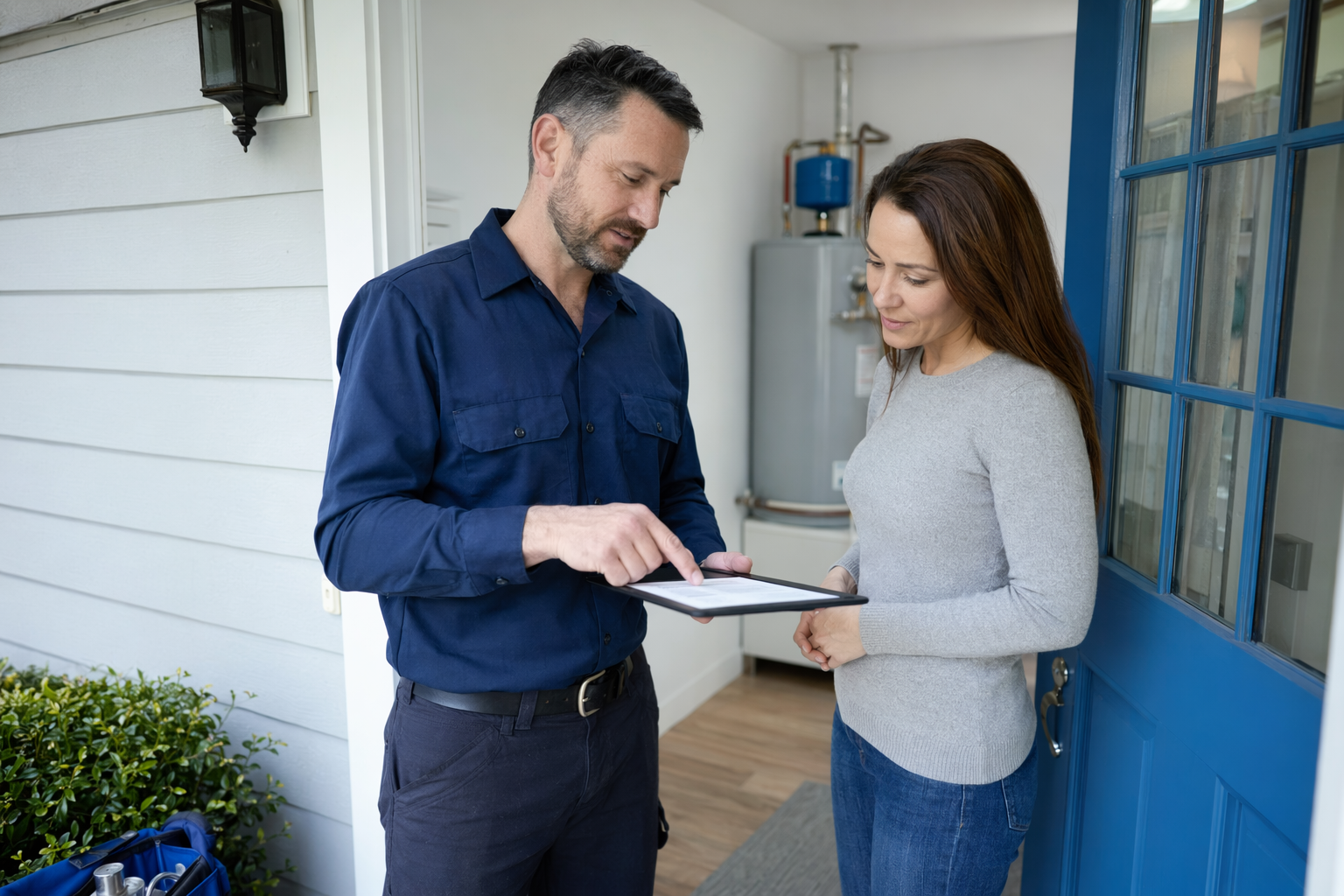
When a water heater can be repaired vs replaced
Some water heater problems are often repairable. Common examples are a failed heating element, thermostat problem, pilot or igniter issue, pressure relief valve problem, drain valve leak, or a bad expansion tank. A plumber may also fix certain pipe connections, shutoff valves, or venting-related issues depending on the setup.
Replacement is more likely when the tank itself is leaking, the unit is very old, there is major rust or corrosion, parts are no longer practical to replace, or the repair cost is close to the cost of a new unit. Many tank-style heaters last around 8 to 12 years, but life varies by water quality, maintenance, usage, and model. Tankless units can last longer, but they still need repairs and descaling.
A leak from a fitting above the tank may be repairable. A leak from the tank body itself usually means replacement. If you see rusty water, hear loud popping, or run out of hot water very quickly, a plumber will need to check whether the problem is sediment, a failed part, or a sign the unit is near the end of its life.
If you are not sure what you have, that is normal. A licensed plumber can identify whether it is a tank or tankless heater, gas or electric, and what work is actually needed.
How plumbers diagnose the problem
A plumber usually starts with the basics: the age and size of the unit, whether it is gas or electric, where the leak is, whether there is any hot water at all, and whether the problem is constant or only at busy times. They may check the shutoff valves, connections, temperature setting, pressure relief valve, venting, burner or igniter parts, thermostats, heating elements, and signs of corrosion or sediment.
For tank-style units, diagnosis often focuses on whether the tank is sound and whether the failed part is external and replaceable. For tankless units, diagnosis may include flow issues, scale buildup, venting, sensors, ignition, or error codes. The plumber may also look at water pressure, nearby piping, and whether the current setup meets local requirements.
If replacement is needed, they may discuss size, fuel type, efficiency, venting, and whether upgrades are needed to bring the installation up to local code. That can affect total cost and installation time.
Before authorizing work, ask for the problem, recommended fix, and price in writing. The household stays in control: you choose who to hire, confirm the price before work starts, and confirm the work is done before paying the final amount.
Water heater repair and replacement cost ranges
Water heater costs vary a lot by the exact problem, the type of heater, your area, the parts needed, and whether the work happens at night, on a weekend, or on a holiday. These are general ranges, not quotes.
A smaller repair may be around $150 to $500. A more involved repair, especially with specialty parts or after-hours service, can be roughly $500 to $1,200 or more. Tankless repairs can sometimes cost more because parts and diagnosis may be more specialized.
Replacing a standard tank water heater often lands around $1,200 to $3,500 total, depending on size, brand, venting, code updates, and installation complexity. Tankless replacement can be higher, often around $2,500 to $5,500 or more, especially if new gas, venting, electrical, or piping changes are needed.
Costs usually go up with after-hours calls, hard-to-access locations, permit or code-related updates, upgraded venting, expansion tank work, old shutoff valves, disposal of the old unit, and switching from tank to tankless. Costs may be lower for straightforward replacements where the new unit fits the existing setup well.
If you want broader pricing context, see our costs guides. Real prices depend on the plumber, the job, your location, and what is found once the unit is inspected.
Tank vs tankless: simple pros and trade-offs
A standard tank water heater stores hot water and is common in many US homes. It is usually less expensive up front, and replacement can be simpler if you are installing a similar model. The trade-off is that it can run out of hot water during heavy use, and the tank itself eventually wears out.
A tankless water heater heats water as needed. It can save space and may provide a longer service life with proper maintenance. But the upfront cost is often higher, and installation can become expensive if the home needs venting, gas-line, electrical, or piping changes.
Neither option is automatically best for every household. A licensed plumber can explain what fits your home, your hot-water use, and local requirements. If your current heater failed during an emergency, many households choose the most practical safe replacement rather than the most complicated upgrade.
If you need help fast, start with our services hub or emergencies page, then get matched for local help.
How to find a licensed plumber and avoid overpaying
In an emergency, it is easy to feel pressured. Slow the decision down just enough to verify the basics. Ask whether the plumber is licensed and insured for your area, ask what they think the problem is, and ask for the price in writing before work begins. MainLine Match can help connect you with licensed, insured plumbers, but we do not perform plumbing work ourselves.
Watch for common red flags: vague pricing, scare tactics, pressure to approve a huge replacement immediately without a clear explanation, cash-only demands, refusal to show license or insurance information, or statements that a permit or inspection never matters. Rules vary by area, and a licensed local plumber should know what applies.
It is reasonable to ask whether repair is still worth it, what replacement options exist, what is included, and whether disposal of the old unit is part of the price. If the answer is unclear, keep asking. You should know what work is being done and what you are paying for.
To get matched, you only need to share basic contact and problem details such as your name, phone, optional email, problem type, ZIP code, and preferred language. The service is free for the household.
If your water heater is leaking or not making hot water, protect people, stop the water if you safely can, and have a licensed plumber check whether a repair is reasonable or replacement makes more sense.
Common questions
My water heater is leaking. Do I need a repair or a full replacement?
It depends on where the leak is coming from. A leaking pipe connection or valve may be repairable, but a leak from the tank body itself often means the unit needs replacement.
Why do I have no hot water all of a sudden?
Common causes include a failed heating element, thermostat issue, pilot or igniter problem, tripped electric component, gas supply issue, or a larger unit failure. A licensed plumber can diagnose the cause safely on site.
Is it worth repairing an old water heater?
Sometimes yes, sometimes no. If the unit is older, corroded, or needs an expensive repair, replacement may make more sense, but the decision depends on age, condition, repair cost, and local installation costs.
How long does a water heater replacement take?
A straightforward replacement may be done the same day, but more complex jobs can take longer if there are code updates, venting changes, access issues, or parts delays. No one should promise an exact timeline before seeing the job.
Should I switch from a tank water heater to tankless?
Maybe, but it is not always the lowest-cost option. Tankless can be a good fit for some homes, but installation may require changes to gas, venting, electrical, or piping that raise the total price.
How can I avoid being overcharged during a water heater emergency?
Ask for the diagnosis and total price in writing before work starts, verify license and insurance, and be careful with vague pricing or pressure to approve a very large job immediately. You stay in control of who you hire and what you authorize.