Quick answers
How do I stop an overflowing toilet?
First, stop the water. Most toilet overflows can be slowed or stopped quickly by closing the toilet’s water valve or lifting the tank float, then you can clean up and decide if you need a plumber.
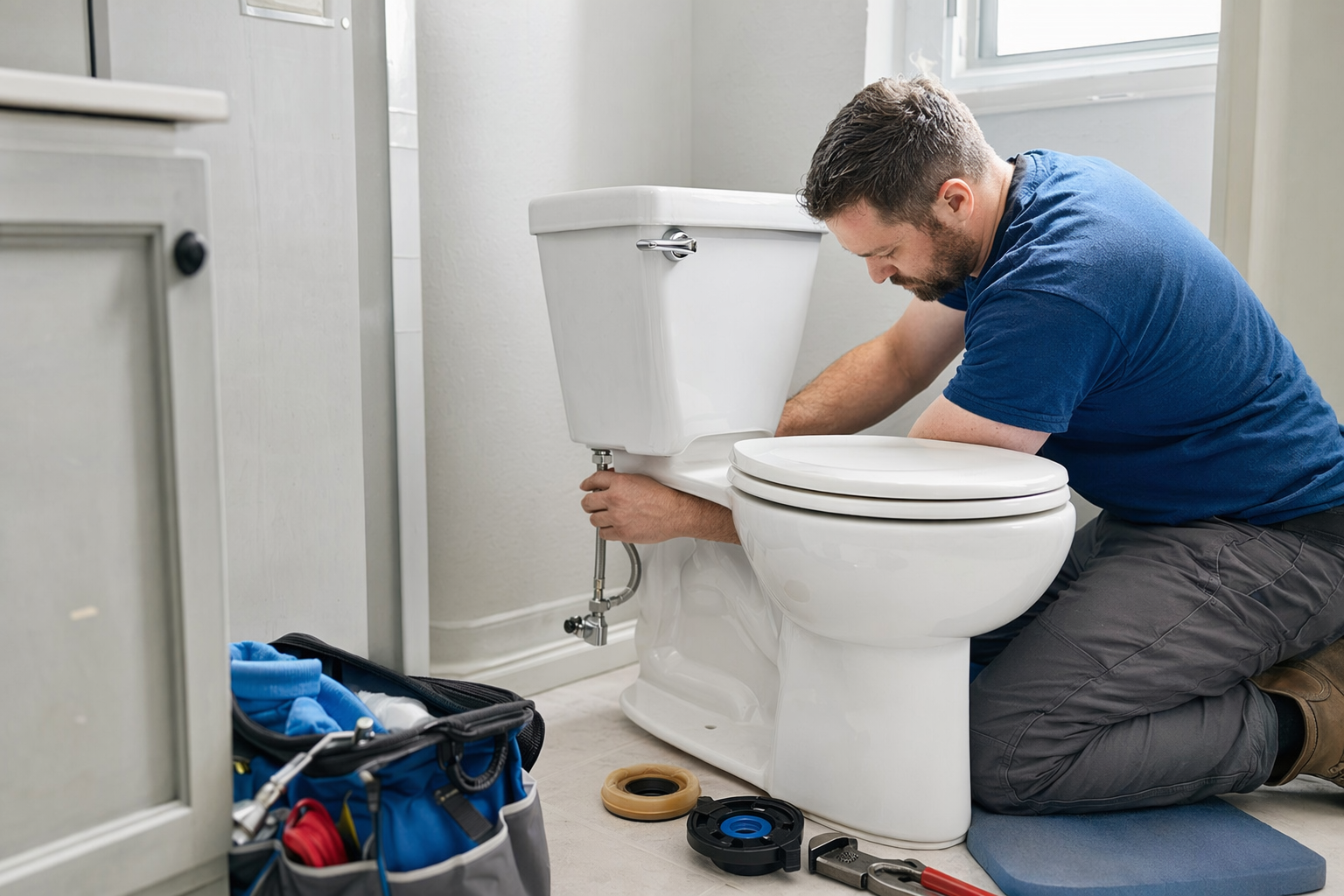
What to do right now
- Do not flush again.
- If water is still rising, take the lid off the toilet tank and gently lift the float up. That usually tells the toilet to stop filling.
- Turn the small shutoff valve behind or beside the toilet clockwise to stop water going into the toilet.
- If you cannot stop the water at the toilet, shut off your home’s main water if you know where it is.
- Move towels, paper, rugs, and anything you want to keep away from the water.
- If water is near outlets, cords, or anything electrical, leave the area and call your local emergency number first.
- If sewage is coming up from the toilet, tub, or floor drain, stop using all water in the home and get help fast.
- Do not keep flushing to “see if it clears”
- Keep children and pets away from dirty water
How to stop the overflow
An overflowing toilet usually happens for one of two reasons: the toilet is clogged, or the tank keeps filling and will not shut off. The fastest move is to stop the incoming water.
Look for the shutoff valve near the base of the toilet, usually on the wall. Turn it clockwise. If the toilet stops filling, the overflow should stop.
If the bowl was already too full, it may still spill a little, so use towels or a shallow container if you can do that safely. If the tank is the problem, lifting the float inside the tank may stop the water until you can close the valve.
This is general information only, not plumbing or safety advice. If you are not sure what you are looking at, or the toilet keeps overflowing, it is reasonable to stop and call a licensed plumber.
Can I clear it myself?
Sometimes, yes. If the water has stopped and the problem seems to be a simple clog, a toilet plunger may help. Use a flange-style toilet plunger if you have one, keep the bowl from overflowing, and work slowly. If the bowl is already very full, wait for the level to go down first.
Do not mix drain chemicals, and do not keep trying over and over if nothing changes. Chemical cleaners can make a mess more dangerous and may damage parts or create a bigger cleanup problem.
If more than one drain is backing up, if the toilet overflows when you run a sink or shower, or if sewage is coming up elsewhere, this may be a larger drain or sewer issue. In that case, stop using water in the home and get a licensed plumber quickly. Costs and responsibility can vary by area, building type, and whether the issue is inside the home or in a shared or public line.
When to call a plumber
Call for help if the toilet will not stop filling, the shutoff valve will not work, the clog will not clear, dirty water has spread, or you think this is part of a bigger backup. If you rent, your landlord or property manager may also need to be told right away.
A licensed, insured plumber is the safest choice for emergency toilet overflow problems, especially after hours or when sewage is involved. Verify the plumber is licensed and insured if your area requires it, and ask for the price in writing before work starts.
MainLine Match is a free matching service, not a plumbing company, licensed plumber, or contractor. We do not do plumbing work. We can help you get connected with a licensed, insured, 24/7 emergency plumber near you through get matched, and it is always free for the household.
What it may cost
For a toilet overflow tied to a basic clog, emergency service may sometimes run about $150 to $400. If parts inside the tank need replacement, the total may be higher depending on the part and labor. If the problem is a larger drain or sewer backup, costs can go much higher.
After-hours, weekends, holidays, difficult access, multiple toilets backing up, cleanup needs, and replacement parts can all raise the price. Your location also matters. These are general ranges, not quotes, and the real number depends on the actual problem, the time of day, the parts, and the area.
If you want a better sense of pricing before you call, see costs. The most important thing is to get the price in writing before work starts and make sure you understand what is included.
Red flags and how to stay in control
A stressful plumbing problem can make it easier to overpay. Be careful with anyone who gives vague pricing, uses scare tactics, wants cash only, will not show license or insurance information when appropriate, or pressures you to approve a very large repair immediately.
You stay in control. Ask what they think the problem is, what they plan to do first, how much the visit costs, and what could make the price go up. Confirm the price before work starts, choose who to hire, and confirm the work is done before paying the final amount.
If you want more plain-language help first, start at help or browse other guides. If the overflow will not stop or sewage is involved, it may be best to get matched now.
Stop the water first, do not flush again, and if the overflow will not stop or sewage is involved, get a licensed plumber fast.
Common questions
What is the first thing I should do when my toilet is overflowing?
Do not flush again. Remove the tank lid, lift the float if the water is still rising, and turn the toilet’s shutoff valve clockwise to stop more water from entering.
Where is the toilet shutoff valve?
It is usually on the wall behind the toilet or low on the side near the base. It is a small valve connected to the water line going into the tank.
Why is my toilet overflowing even when I did not flush?
That can happen when tank parts do not shut off the water correctly, so the toilet keeps filling. It can also happen if there is a blockage that prevents normal draining.
Should I use Drano or another drain cleaner in an overflowing toilet?
Usually it is better not to. Chemical cleaners may not fix the real problem and can make the situation messier or harder to handle safely.
When is an overflowing toilet a bigger emergency?
If sewage is coming up in more than one place, if other drains are backing up, if the toilet shutoff will not stop the water, or if water is near electricity, treat it as urgent. Leave the area and call your local emergency number first if there is danger from electricity.
Can MainLine Match send a plumber?
MainLine Match is not a plumbing company and does not perform plumbing work. We are a free matching service that helps connect households with licensed, insured, 24/7 emergency plumbers near them.